Best Dog Foods With Probiotics for a Great Pyrenees's Gut Health
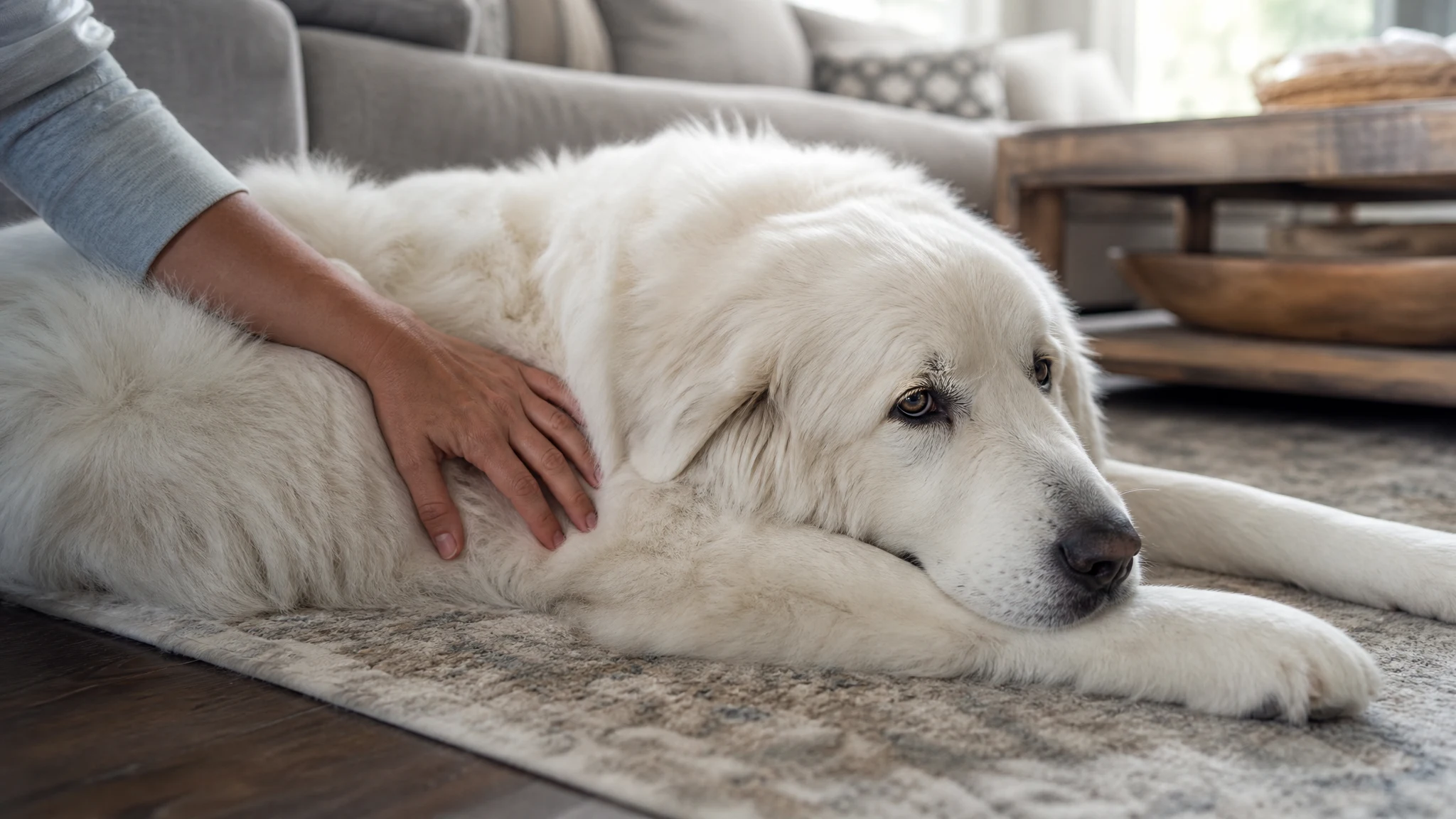
General nutrition information compiled from product labels and published sources, not veterinary advice. Your veterinarian is the right person to choose a diet for your dog, especially one with a health condition.
Many owners want dog probiotics for gut health, and many bags hint at them with a small line on the front. A Great Pyrenees is a large dog, so the food needs to fit the breed first. Any gut-friendly extras come second.
This guide shows you how to check a food label for probiotics, how to compare large-breed foods, and how to switch foods calmly. It does not claim any food treats or prevents a condition. Your veterinarian decides what is right for your individual dog.
How we compared foods
We compared label data from the brand's own product pages: the AAFCO statement, life stage, protein, fat, calories and first ingredients. We did not run feeding trials or taste tests, and we have not fed any of these foods to a dog.
One gap matters for this topic. The label data we compared does not list a probiotic statement for any of the foods below. That does not mean none contain one. It means you should read the brand's page or the bag for yourself, as step 3 explains.
What you need
- Your dog's current weight and age, and your veterinarian's view on body condition.
- The bag or product page of each food you are considering.
- A pen and paper, or a note on your phone, to record label details.
- Your veterinarian's contact details, for questions about any gut or stool changes.
Step-by-step: choosing a food and checking for probiotics
Step 1: Match the food to your dog's life stage and size
The Hill's Pet breed page lists adult Great Pyrenees at 85 to 120 pounds. It also says they need large-breed puppy nutrition until at least 18 months, and that full adult size can take up to two years.
The Hill's page also says calcium and phosphorus ratios matter for bone development. A food with a probiotic is not a good choice if it is the wrong life stage.
Step 2: Find the AAFCO statement
Look for the small print saying the food is complete and balanced. For growth and all-life-stages foods, a Great Pyrenees falls in the large-size class (70 pounds or more as an adult). Dog Food Advisor explains that these foods must say whether they include or exclude growth of large-size dogs. Choose a puppy label that says it includes growth of large-size dogs. If the wording is unclear, ask the brand.
Step 3: Look for a probiotic statement
Scan the ingredient list and the guaranteed analysis for live or "viable" microorganisms, usually named by genus and species. Terms such as "fermentation product" or "dried fermentation product" are not the same thing. Marketing on the front of the bag does not replace the back-panel details.
If you cannot find a statement, check with the brand. Do not assume a food contains probiotics because it is a premium or fresh food.
Step 4: Compare calories, protein, fat and first ingredients
Compare foods on the same basis. Some brands print minimums, while Hill's shows dry matter averages. Those are not the same measure, so do not rank them directly. The table below shows what each brand page lists.
| Food | Life stage | Protein / fat | Calories | First ingredients |
|---|---|---|---|---|
| Royal Canin Giant Adult Dry | Adult giant breed, over 100 lb | 26% min / 18% min | 427 kcal per cup | Chicken by-product meal, brewers rice, chicken fat |
| Royal Canin Large Adult Dry | Adult large breed, 56 to 100 lb | 24% min / 15% min | 360 kcal per cup | Chicken by-product meal, brewers rice, wheat |
| Royal Canin Giant Puppy Dry | Giant puppy, up to 8 months | 32% min / 12% min | 338 kcal per cup | Chicken by-product meal, brewers rice, wheat gluten |
| Hill's Science Diet Adult Large Breed Chicken & Barley | Adult, 1 to 5 years | 23.8% / 15% (dry matter averages) | 365 kcal per cup | Chicken, cracked pearled barley, brown rice |
| Hill's Science Diet Puppy Large Breed Chicken & Brown Rice | Large breed puppy, up to 18 months | 26.7% / 15.4% (dry matter averages) | 387 kcal per cup | Chicken, brown rice, whole grain oats |
| Hill's Science Diet Adult 6+ Large Breed | Mature adult | 18.7% / 13.5% (dry matter averages) | 352 kcal per cup | Chicken meal, cracked pearled barley, brewers rice |
| VICTOR Hi-Pro Plus Large Breed Puppy | All life stages | 30% min / 14% min | 365 kcal per cup | Chicken, chicken meal, brown rice |
| Freshpet Large Dog Multi-Protein | Adult maintenance | 20% min / 14% min | 348 kcal per cup | Chicken, egg, beef |
| Nom Nom Beef Mash | All life stages, including large-size growth | 8% min / 5% min | 201 kcal per cup | Ground beef, russet potatoes, eggs |
| JustFoodForDogs Beef & Russet Potato | Adult maintenance only, not for growing puppies | 8.5% min / 7% min | 44 kcal per oz (no per-cup figure listed) | Beef, beef liver, russet potatoes |
Fresh and frozen foods hold more water, so their percentages look lower on the label. That is not a flaw. It is a reason to compare calories, and not percentages alone.
For a fuller side-by-side, see our label-by-label comparison of dog foods for Great Pyrenees.
Step 5: Check the feeding guide, and treat it as a starting point
Each brand's guide gives a starting amount. Royal Canin's Large Adult page, for example, has a table by target adult weight and activity level. Hill's tells owners to adjust amounts to maintain optimal weight. Watch your dog's body condition and ask your veterinarian to adjust the amount.
Step 6: Switch foods gradually
Mix a little of the new food into the old one. Increase the share over several days to a couple of weeks. A sudden change is a common reason for loose stools, whatever the food contains. If your dog has ongoing stool trouble, call your veterinarian before changing anything else.
Step 7: Plan meals around bloat risk
PetMD lists bloat (GDV) as life-threatening in this breed. It advises several small meals, avoiding vigorous exercise around mealtimes and avoiding raised bowls. It also notes that a gastropexy is often performed in connection with GDV. Ask your veterinarian what applies to your dog. Consider bloat signs an emergency.
Tips
- Change one thing at a time, so you know what caused any change in stools.
- Keep a short log of stool quality, appetite and energy during a switch.
- Ask the brand directly about probiotic content and the strains used, if the page does not say.
- Check the FDA's page on diets and canine dilated cardiomyopathy with your veterinarian if you are weighing grain-free foods. Its latest update is dated December 23, 2022, and the FDA says it does not plan further public updates until there is meaningful new scientific information.
Common mistakes to avoid
- Buying by the front of the bag. The AAFCO statement and ingredient list tell you more.
- Ignoring life stage. A giant adult food is not for a puppy, and an adult-only fresh food such as JustFoodForDogs Beef & Russet Potato is not intended for growing puppies, according to its page.
- Comparing mismatched numbers. Dry matter averages and as-fed minimums are different measures.
- Adding supplements on top. Ask your veterinarian first. We do not give doses.
- Expecting a food to fix a health problem. Hip and elbow dysplasia, for example, are hereditary. PetMD says exercise, weight and nutrition can influence them, and the Hill's page mentions controlled growth and moderate exercise. A veterinarian guides any health decision.
What to expect
Some owners notice steadier stools after a careful switch to a food that suits their dog. Results vary, and a probiotic may or may not make a difference for your dog. Nothing here is proof that any product will improve digestion.
Call your veterinarian if your dog has vomiting, blood in the stool, a swollen belly or low energy. Do not wait to see whether a new food helps.
Sources
- Hill's Pet: Great Pyrenees breed page
- PetMD: Great Pyrenees breed page
- Westminster Kennel Club: Great Pyrenees breed page
- Dog Food Advisor: AAFCO nutrient profiles
- FDA Center for Veterinary Medicine: diets and canine dilated cardiomyopathy
- Royal Canin: Giant Adult Dry
- Royal Canin: Large Adult Dry
- Royal Canin: Giant Puppy Dry
- Hill's Science Diet: Adult Large Breed
- Hill's Science Diet: Puppy Large Breed
- Hill's Science Diet: Adult 6+ Large Breed
- VICTOR: Hi-Pro Plus Large Breed Puppy
- Freshpet: Large Dog Multi-Protein Recipe
- Nom Nom: Beef Mash
- JustFoodForDogs: Beef & Russet Potato