Elevated vs Floor Feeding for Great Pyrenees: Does It Matter?
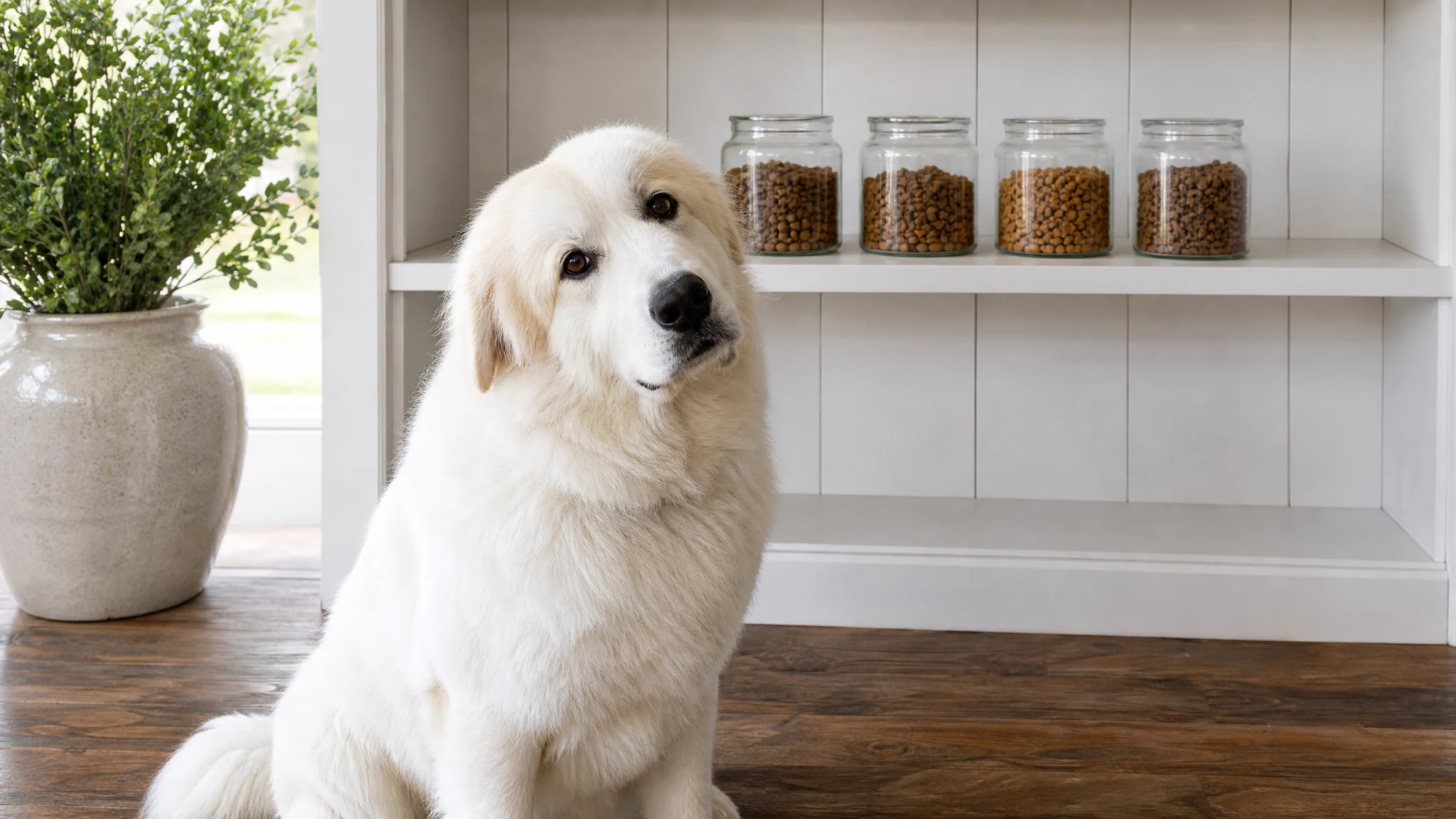
General nutrition information compiled from product labels and published sources, not veterinary advice. Your veterinarian is the right person to choose a diet for your dog, especially one with a health condition.
A Great Pyrenees is a big dog, so a raised bowl can look like the kind choice. Less bending, a straighter neck, a tidier kitchen. But the advice is not as simple as it looks.
This guide explains what the sources say, then walks you through setting up a dog feeding station that suits your dog. It does not promise a result. It is a way to make a careful choice and to watch how your dog does.
The short answer
For most healthy Great Pyrenees, a floor bowl is the safer default. The reason is bloat, also called gastric dilatation-volvulus (GDV). PetMD's Great Pyrenees breed page calls GDV life-threatening. It advises feeding multiple small meals, avoiding vigorous exercise around mealtimes, and avoiding raised bowls.
That is one source, and it is a secondary one. It does not say a raised bowl causes bloat in every dog. It says to avoid them. Because the stakes are high, the cautious reading is to start on the floor unless your veterinarian tells you otherwise.
If your dog has a neck, joint or mobility problem, the answer may change. That is a decision for your veterinarian, who knows your individual dog.
What matters more than bowl height
It is easy to focus on height and miss the habits around it. The same PetMD page points to meal size, timing and exercise. Hill's Pet notes that hip and elbow dysplasia can occur in large-breed dogs, and that controlled growth and moderate exercise support joints. Those are the parts of feeding you can control every day.
Bowl height is one small piece. Portion size, meal spacing and calm time after eating are bigger ones.
Materials you will need
- A sturdy, wide, non-tipping bowl (stainless steel or ceramic are easy to clean)
- A non-slip mat that fits under the bowl
- A measuring cup, or a kitchen scale if your food's label gives weights
- Your dog's current food and its feeding guide from the label or the brand's website
- A small notebook or phone note to track meals and your dog's condition
- A quiet, low-traffic spot with a washable floor
You do not need a special stand to begin. If your veterinarian does recommend a raised bowl, a stand can be added to the same setup later.
Step-by-step: setting up the feeding station
1. Ask your veterinarian first if anything is unusual
If your dog has had bloat, has a family history of it, has had a gastropexy, or has arthritis or a neck problem, ask before changing anything. PetMD notes that a gastropexy is often done to help guard against GDV. Whether your dog needs one is a veterinary call.
2. Pick a calm, steady location
Choose a spot away from the front door, children's play areas and other pets. A dog that gulps because it feels rushed or watched is harder to feed calmly. Put the non-slip mat down and set the bowl on it so it stays put.
3. Start with the bowl on the floor
Given the PetMD guidance, floor level is the sensible starting point. Check that your dog can reach the bowl without stretching or straining. A wide, shallow-to-medium bowl is easier to eat from than a deep, narrow one.
4. Work out the daily amount from the label
Adult Great Pyrenees weigh 85 to 120 pounds, with males heavier, according to Hill's Pet. That is a wide range, so the right amount depends on your dog's weight, age and activity.
Use the feeding guide on your food as a starting point, not a fixed rule. Some guides are tables by adult weight and activity level, such as the one on Royal Canin's Large Adult dry food page. Others point to an online calculator. VICTOR's Hi-Pro Plus Large Breed Puppy page, for example, adds a note for dogs over 100 pounds to increase intake by half a cup for every 20 pounds over 100. Always read the guide for your own food, since they differ.
For amounts by age, see our Great Pyrenees feeding chart by age. If your dog has a health condition, confirm amounts with your veterinarian.
5. Split the day into smaller meals
PetMD advises multiple small meals for this breed. Divide the daily total into two or more portions rather than one large serving. Measure each one. Do not eyeball it, because a scoop can vary a lot from one filling to the next.
Puppies need large-breed nutrition until at least 18 months, according to Hill's Pet, and full size can take up to two years. Puppy meals are often more frequent, so check your puppy food's guide and your veterinarian's advice.
6. Feed, then keep things quiet
Let your dog eat without interruption. Pick up the bowl when the meal is over rather than leaving food out. PetMD advises avoiding vigorous exercise around mealtimes, so plan play and walks well before or after eating. A calm rest period is a simple routine to build.
7. Watch your dog and note what you see
For two to three weeks, write down how fast your dog eats, whether the meal is finished, and how your dog seems afterward. Also note body condition, which you can check by feeling along the ribs and looking at the waist from above.
Any sign of a swollen belly, unproductive retching, restlessness or pain after eating is an emergency. Call a veterinarian right away. Do not wait to see if it passes.
8. Adjust slowly
If your dog is gaining or losing weight, change the portion a little at a time. Hill's Pet product pages say to adjust feeding amounts as necessary to maintain optimal weight, and to ask your veterinarian if unsure. If you switch foods, do it gradually and ask your veterinarian how.
Choosing food that fits the station
The bowl is only half the picture. For a dog this size, the label matters too. Dog Food Advisor explains that growth and all-life-stages foods must state whether they include or exclude growth of large-size dogs, meaning those 70 pounds or more as adults. A Great Pyrenees falls in that class, so look for the wording "including growth of large-size dogs" on puppy and all-life-stages foods.
We compared label data from brand pages. We did not run feeding trials or taste tests. Some examples of what those pages show:
| Food | Stage | Calories per cup (brand page) |
|---|---|---|
| Royal Canin Giant Adult Dry | Adult, giant breeds over 100 lb | 427 kcal ME |
| Royal Canin Large Adult Dry | Adult, 56 to 100 lb | 360 kcal ME |
| Hill's Science Diet Adult Large Breed Chicken & Barley | Adult | 365 kcal |
| Hill's Science Diet Puppy Large Breed Chicken & Brown Rice | Puppy, large breed | 387 kcal |
| VICTOR Hi-Pro Plus Large Breed Puppy | All life stages | 365 kcal |
Calorie density varies, so the same cup of two foods is not the same meal. If you change foods, remeasure rather than reusing your old scoop. Kibble size is not listed on these pages, so check with the brand if it matters to you.
No source we found names a food made specifically for Great Pyrenees. PetMD says the breed generally does well on food formulated for large breeds, and suggests discussing diet with a veterinarian.
Tips
- If your dog gulps, try a wider bowl or a slower, calmer setting before changing anything else.
- Keep fresh water in a separate spot, and ask your veterinarian about water around mealtimes.
- Wash the bowl daily. Great Pyrenees coats collect drool and bits of food around the mouth, so wipe the mat as well.
- Keep the routine the same each day. Predictable meals make behavior easier to read.
- Reward calm behavior near the bowl with praise and a gentle pat, never with force or scolding.
Common mistakes to avoid
- Switching to a raised bowl without asking. PetMD advises avoiding them for this breed because of bloat risk.
- One big meal a day. Smaller, spaced meals are the guidance for this breed.
- Exercise right after eating. Keep play and walks away from mealtimes.
- Guessing portions. Measure every time.
- Feeding adult food to a growing puppy. Hill's Pet says large-breed nutrition should continue until at least 18 months, and notes that calcium and phosphorus ratios matter for bone development.
- Treating bowl height as a health fix. No bowl cures or prevents a condition. Diet is one part of care, and your veterinarian decides what is right for your dog.
What to expect
A steady setup may help your dog eat more calmly and may make portions easier to track. Over a few weeks, you may notice a more predictable routine and a clearer picture of your dog's weight. Results vary from dog to dog, and a feeding station is not a substitute for veterinary care.
Hill's Pet also notes that osteosarcoma is more frequent in giant breeds and advises regular exams. Routine checkups are the best place to raise questions about feeding, weight and joints.