Feeding Stations for Great Pyrenees: What to Look for in a Bowl Setup
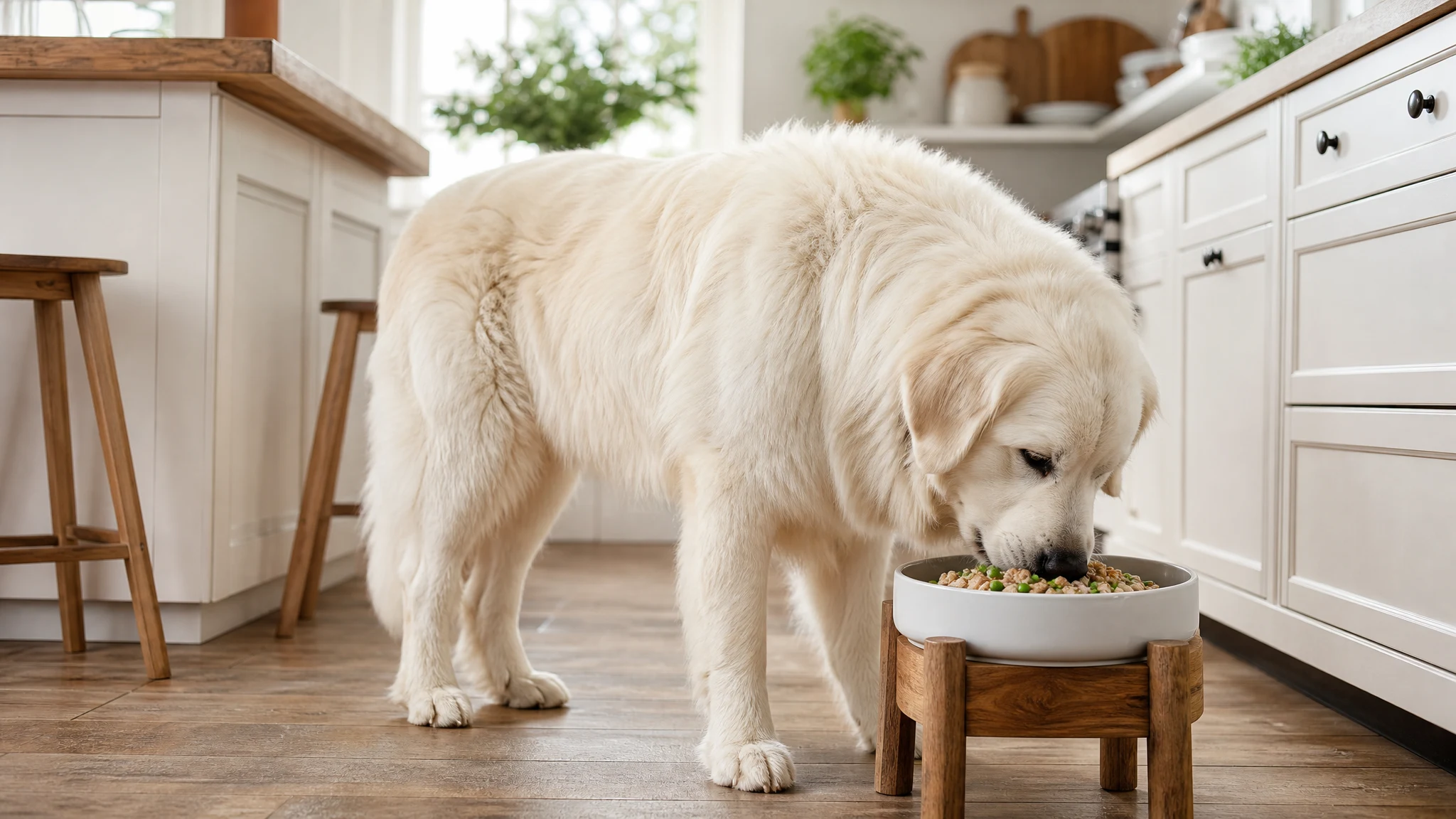
General nutrition information compiled from product labels and published sources, not veterinary advice. Your veterinarian is the right person to choose a diet for your dog, especially one with a health condition.
A dog feeding station is just the spot where your dog eats and drinks, plus the bowls, mat and routine around it. For a big dog, those small choices matter more than they seem.
The Hill's Pet breed page lists adult Great Pyrenees at 85 to 120 pounds, with males heavier. The Westminster Kennel Club puts the breed in the large size category. A dog that size needs sturdy gear and a calm routine. This guide walks through building a setup, step by step, and points out where marketing claims tend to outrun the evidence.
We compared published breed information for this article. We did not test bowls or feeders ourselves, and nothing here replaces advice from your own veterinarian.
What you need
- Two bowls, one for food and one for water, wide and heavy enough that a large dog cannot push them around.
- A non-slip, wipeable mat to sit under the bowls.
- A measuring cup or a kitchen scale, so portions are the same every time.
- The food label or feeding guide from the brand's own website.
- A quiet floor space away from doorways and household traffic.
- A notebook or phone note to track meals and body condition.
Step 1: Decide whether you need a raised bowl (usually, check first)
Raised feeders are heavily marketed to owners of big dogs. The pitch is that bending down is hard on a large frame. The breed sources do not back that up.
PetMD's Great Pyrenees page covers bloat, also called gastric dilatation-volvulus (GDV), which it describes as life-threatening. Its advice includes feeding multiple small meals, avoiding vigorous exercise around mealtimes, and avoiding raised bowls. It also notes that a gastropexy, a surgery that tacks the stomach in place, is often performed in connection with GDV.
PetMD is a secondary source, and no bowl can prevent or treat bloat. Still, the sensible approach is to start with a floor-level setup. Ask your veterinarian before buying a raised stand. If your dog has a mobility problem or another condition, your veterinarian decides what is best for that dog.
Step 2: Choose the bowls
Look for these traits, and ignore the rest of the packaging:
- Weight and base. A bowl that slides across the floor makes mealtime messy and can encourage chasing it around.
- Wide opening. A deep, narrow bowl is awkward for a large muzzle. A broad, stable shape is easier to use.
- Easy-clean material. Stainless steel and ceramic are common choices. Pick whichever you will actually wash daily.
- Plain design. Skip gadgets with claims about digestion or joint health. We found no breed source in our research that supports them.
Slow-feeder bowls are sold with the promise of calmer eating. If your dog gulps, one may help slow the pace, but check with your veterinarian first, especially given the bloat concern above. Pick a shape your dog can eat from without frustration.
Step 3: Pick the spot
Put the station where your dog can eat without being stepped over or startled. A corner of the kitchen or a utility area works well. Keep it on a surface that tolerates spills.
Place the water bowl beside the food bowl, or nearby, and keep fresh water available. If you have other pets or children, give your Great Pyrenees a separate space so nobody is crowded while eating.
Set the mat down first. Then place the bowls on it, with enough room that your dog does not push a bowl off the edge while eating.
Step 4: Set the portions from the label
Amounts depend on your dog's age, weight, activity level and the specific food. Treat any feeding guide as a starting point, not a prescription.
Start with the guide on the brand's own website or bag. For example, the Royal Canin Giant Adult page points to a feeding calculator, while the Hill's Science Diet Adult Large Breed page says to adjust amounts as necessary to maintain optimal weight. Those two lines show how differently brands present this. Calorie density also differs. Royal Canin lists 427 kcal per cup for Giant Adult and 360 for Large Adult, so a cup of one is not equal to a cup of the other.
For age-based amounts, see our Great Pyrenees feeding chart by age. Keep in mind that Hill's says Great Pyrenees puppies need large-breed nutrition until at least 18 months, and full adult size can take up to two years. Hill's also says calcium and phosphorus ratios matter for bone development, so a puppy food should say whether it covers growth of large-size dogs. That wording comes from AAFCO's rules for dogs expected to reach 70 pounds or more as adults, a class a Great Pyrenees falls into.
If your dog has a health condition, confirm amounts with your veterinarian before settling on a number. The same goes for any supplement or topper you are thinking of adding. Do not guess at doses.
Step 5: Build the mealtime routine
- Measure the portion with the same cup or scale each time.
- Split the day's food into more than one meal. PetMD's bloat advice includes multiple small meals, so ask your veterinarian how many is right for your dog.
- Set the bowl down calmly. Ask for a sit or a pause, and reward it with the meal itself. Reward-based habits are consistent with the American Veterinary Society of Animal Behavior (AVSAB).
- Let your dog eat without interruption. Do not reach in or take the bowl away as a test.
- Keep the hour around meals quiet. PetMD advises avoiding vigorous exercise around mealtimes.
- Pick up leftover food after a reasonable time, wash the bowls, and refresh the water.
Step 6: Check in and adjust
Every few weeks, look at your dog's body shape and your notes. Can you feel the ribs under a light covering? Is the coat and energy steady? If weight is creeping up or down, change the portion slightly and recheck, or ask your veterinarian to weigh in.
Hill's lists hip and elbow dysplasia as conditions that can occur in large breeds, and says controlled growth and moderate exercise support joints. PetMD says exercise, weight and nutrition can influence them. That is a reason to keep portions steady and the dog lean. It does not mean any food or bowl treats the condition.
Common mistakes to avoid
- Buying a raised feeder because the label says it helps big dogs. Check with your veterinarian first, given PetMD's advice.
- Using "a scoop" instead of a measure. Scoops vary a lot in size.
- Switching foods suddenly. Change gradually and ask your veterinarian about the schedule.
- Feeding puppy food on the wrong terms. A large-breed puppy food and a general puppy food are not the same. For example, the Hill's Science Diet Puppy Chicken & Barley canned entree is a general puppy food and not a large-breed formula, according to the Hill's page.
- Exercising hard right after a meal. This runs against the bloat guidance above.
- Placing the station in a busy spot. Stress and interruptions make mealtimes harder.
- Trusting a bowl's health claims. Ask what source supports the claim.
What to expect
A steady setup may make meals calmer and cleanup easier, and it may help you notice changes in appetite sooner. Results vary by dog. A good station can support a routine, but it cannot prevent bloat, joint problems or any other condition. If your dog stops eating, vomits, has a swollen belly or seems distressed, contact a veterinarian right away.
A note on food choice
The bowl is only half of the setup. When you compare foods, read the AAFCO statement, the ingredient list and the guaranteed analysis. Some brands, such as Hill's, show dry matter averages on their pages instead of guaranteed minimums, so the numbers are not directly comparable to a bag's guaranteed analysis. We did not run feeding trials or taste tests. We only compared label data published by the brands.
The FDA's Center for Veterinary Medicine has investigated a possible link between certain diets and canine dilated cardiomyopathy (DCM). Its page was last updated December 23, 2022, and the agency says it does not plan further public updates until there is meaningful new scientific information. If diet type worries you, discuss it with your veterinarian.