Best Dog Food for a Great Pyrenees With Itchy Skin
General nutrition information compiled from product labels and published sources, not veterinary advice. Your veterinarian is the right person to choose a diet for your dog, especially one with a health condition.
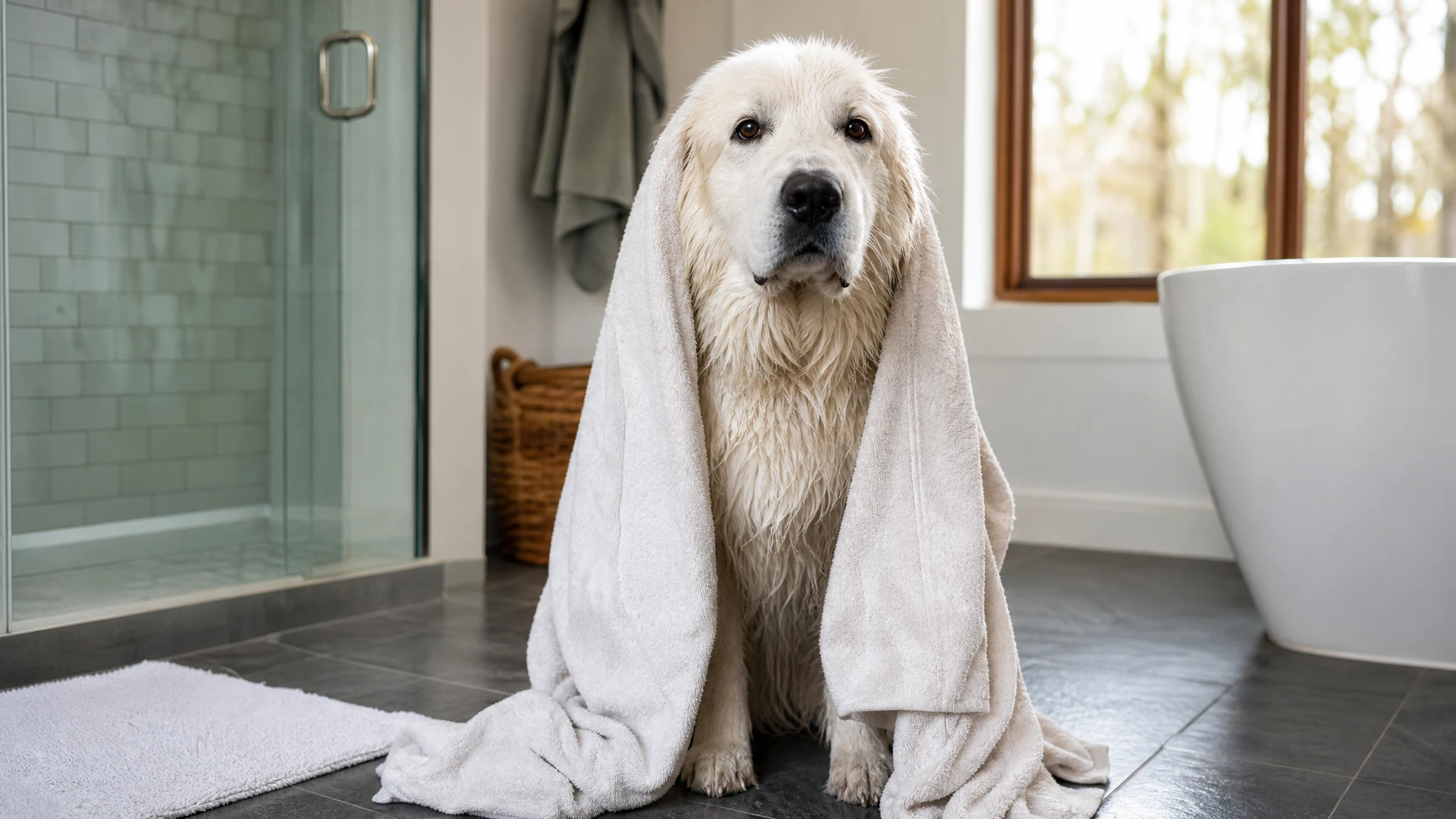
A Great Pyrenees scratching at a thick white coat is hard to watch. It is also hard to read. Itching can come from several places, and food is only one of them.
This guide shows a careful way to look for the best dog food for itchy skin in a Great Pyrenees. It does not promise that any bag will stop the itch. It shows how to read labels, how to compare foods fairly, and when to hand the question to your veterinarian.
A note on how we compared foods
We compared label data published on each brand's own product page. We did not run feeding trials or taste tests, and we did not feed any of these foods to dogs. A label can tell you what is in a bag. It cannot tell you how your dog's skin will respond.
No food is made specifically for Great Pyrenees skin. The sources we relied on do not list one. Large-breed and giant-breed formulas are the closest match by size.
What you need before you start
- Your dog's current food bag or can, with the full ingredient list and the "nutritional adequacy" statement.
- Your dog's current weight and age.
- A notebook or phone note for dates, foods, treats and itching.
- A list of everything your dog eats, including treats, chews, table scraps and anything used to hide pills.
- An appointment with your veterinarian.
Step 1: Get the itch checked first
Start with a vet visit, not a new bag of food. Fleas, environmental triggers, infections and other problems can all cause itching. A food change will not help if the cause is something else.
Your vet can also say whether a food reaction is even likely. If it is, they may suggest a structured elimination diet. Prescription diets are something only a veterinarian prescribes. Do not try to copy one with store-bought food.
Bring your notes. Mention when the itching started, where it happens and whether it follows a diet change.
Step 2: Match the food to your dog's life stage and size
A Great Pyrenees is a large breed. Hill's Pet lists adults at 85 to 120 pounds, with males heavier. That puts the breed in the group AAFCO calls large-size dogs, meaning 70 pounds or more as an adult.
For puppies, Hill's Pet says Great Pyrenees need large-breed puppy nutrition until at least 18 months. Full adult size can take up to two years. It also notes that calcium and phosphorus ratios matter for bone development.
If your dog is still growing, look for a growth or all-life-stages label that says it includes growth of large-size dogs. If the label does not say this, ask the brand or your vet before buying it.
Step 3: Read the label in the right order
- Nutritional adequacy statement. Look for wording that the food is complete and balanced for your dog's life stage. Wording such as "formulated to meet" or "animal feeding tests" tells you how the food was substantiated.
- First five ingredients. These show the main components. Note any ingredient your vet has flagged.
- Guaranteed analysis. Minimum protein and fat and maximum fiber are the guaranteed numbers. Some brands show "dry matter average" figures on their web pages instead. Those are averages, not guarantees, so do not compare them directly with minimums.
- Calories per cup. This is what lets you compare portions between foods.
Be wary of skin-related marketing words. They are not a promise that the food will relieve itching.
Step 4: Compare a short list of label data
The table below uses only what each brand publishes. It is a way to compare labels, not a ranking and not a recommendation for your dog.
| Food | Stage | First ingredients | Calories per cup |
|---|---|---|---|
| Hill's Science Diet Adult Sensitive Stomach & Skin Large Breed Chicken & Barley | Adult, large breed | Chicken, chicken meal, yellow peas, cracked pearled barley, brown rice | 393 |
| Royal Canin Giant Adult Dry | Adult, over 100 lb | Chicken by-product meal, brewers rice, chicken fat, brown rice, corn protein meal | 427 |
| Royal Canin Large Adult Dry | Adult, 56 to 100 lb | Chicken by-product meal, brewers rice, wheat, brown rice, chicken fat | 360 |
| Freshpet Large Dog Multi-Protein Recipe | Adult maintenance, fresh | Chicken, egg, beef, salmon, beef liver | 348 |
A few things stand out. Hill's lists its sensitive stomach and skin formula as a large-breed adult food. Its first ingredient is chicken, and it also includes chicken meal. The Royal Canin Giant Adult formula lists a guaranteed minimum of 26% protein and 18% fat, with a 3.9% maximum for fiber. Hill's page shows dry matter averages for this formula (25% protein, 16.7% fat, 1.5% fiber) rather than guaranteed minimums.
Nearly every food above contains chicken in some form. If your vet suspects a reaction to a particular protein, that detail matters. Your vet makes that call, not the label.
Two other fresh foods carry label data. Nom Nom's Beef Mash is labeled for all life stages, and its page says that includes growth of large-size dogs. JustFoodForDogs Beef & Russet Potato is for adult maintenance and is not intended for growing puppies. Check each brand's own page for the full details, since some statements were only partly shown.
Kibble size is not given on these pages. If your dog gulps food or has trouble with the shape, ask the brand.
Step 5: Change one thing at a time
If your vet agrees to a new food, switch gradually over several days unless they tell you otherwise. Change only the main food. Do not add new treats, chews or toppings at the same time.
If you change three things and the itching shifts, you will not know which one mattered. Your vet may want a longer, stricter trial for a suspected food reaction. Follow their plan.
Step 6: Use feeding guides as a starting point
Each brand's feeding chart is a starting point, not a prescription. Hill's says to adjust amounts as needed to maintain optimal weight. Royal Canin points to a calculator on the giant-breed pages and gives a table by target adult weight on the large-breed page.
Weigh your dog and check body condition at regular intervals. Ask your vet to confirm the amount.
Bloat is also worth knowing about in this breed. PetMD notes that gastric dilatation-volvulus is life-threatening and advises several small meals, no vigorous exercise around mealtimes and no raised bowls. Ask your vet whether a preventive surgery called gastropexy is right for your dog. It is often done to help prevent this condition.
Step 7: Keep a simple log
Write down the date, the food, the portion, any treats and how itchy your dog seems. Note scratching, licking, chewing and any visible redness. Photos help.
Share the log at follow-up visits. It gives your vet something concrete to look at, rather than a memory.
Tips
- Check the label sentence about large-size dogs for any growth or all-life-stages food.
- Keep treats simple and consistent while you are tracking changes.
- Ask the brand directly about anything the web page does not state.
- Read our broader guide to Great Pyrenees nutrition and the diet factors that matter for the full picture.
Common mistakes to avoid
- Assuming it is the food. Itching has many causes. Skipping the vet visit can delay real treatment.
- Switching foods every few weeks. Constant changes make it impossible to tell what is helping.
- Treating grain-free as a fix. Several foods above are not grain-free, and the grain-free label alone says nothing about skin. The FDA Center for Veterinary Medicine has investigated a possible link between certain diets and canine dilated cardiomyopathy. Its latest update on that page is dated December 23, 2022, and it does not plan further public updates until there is meaningful new scientific information. Ask your vet before choosing a diet on this basis.
- Feeding a puppy adult food. Large-breed puppies need growth formulas suited to large dogs.
- Adding supplements on your own. Talk to your vet before adding anything to the bowl.
- Comparing averages with minimums. A dry matter average and a guaranteed minimum are different numbers.
What results to expect
Results vary. A suitable, complete diet may support overall skin and coat health, and some dogs may seem more comfortable over time. Others may show no change, because the cause of the itch is not always diet-related.
No food prevents, treats or cures a skin condition. If your dog is still itchy after a reasonable period, or has open sores, a bad smell or signs of pain, return to your vet. Your vet decides what is right for an individual dog.
The best dog food for itchy skin is the one that suits your dog's size, life stage and vet's advice, and that you can feed consistently.
Sources
- Hill's Pet: Great Pyrenees breed page
- PetMD: Great Pyrenees breed page
- Westminster Kennel Club: Great Pyrenees breed page
- FDA Center for Veterinary Medicine: diets and canine dilated cardiomyopathy
- Hill's Pet: Science Diet Adult Sensitive Stomach & Skin Large Breed
- Royal Canin: Giant Adult Dry
- Royal Canin: Large Adult Dry
- Freshpet: Large Dog Multi-Protein Recipe
- Nom Nom: Beef Mash
- JustFoodForDogs: Beef & Russet Potato