Dog Nutrition Basics Every Great Pyrenees Owner Should Know
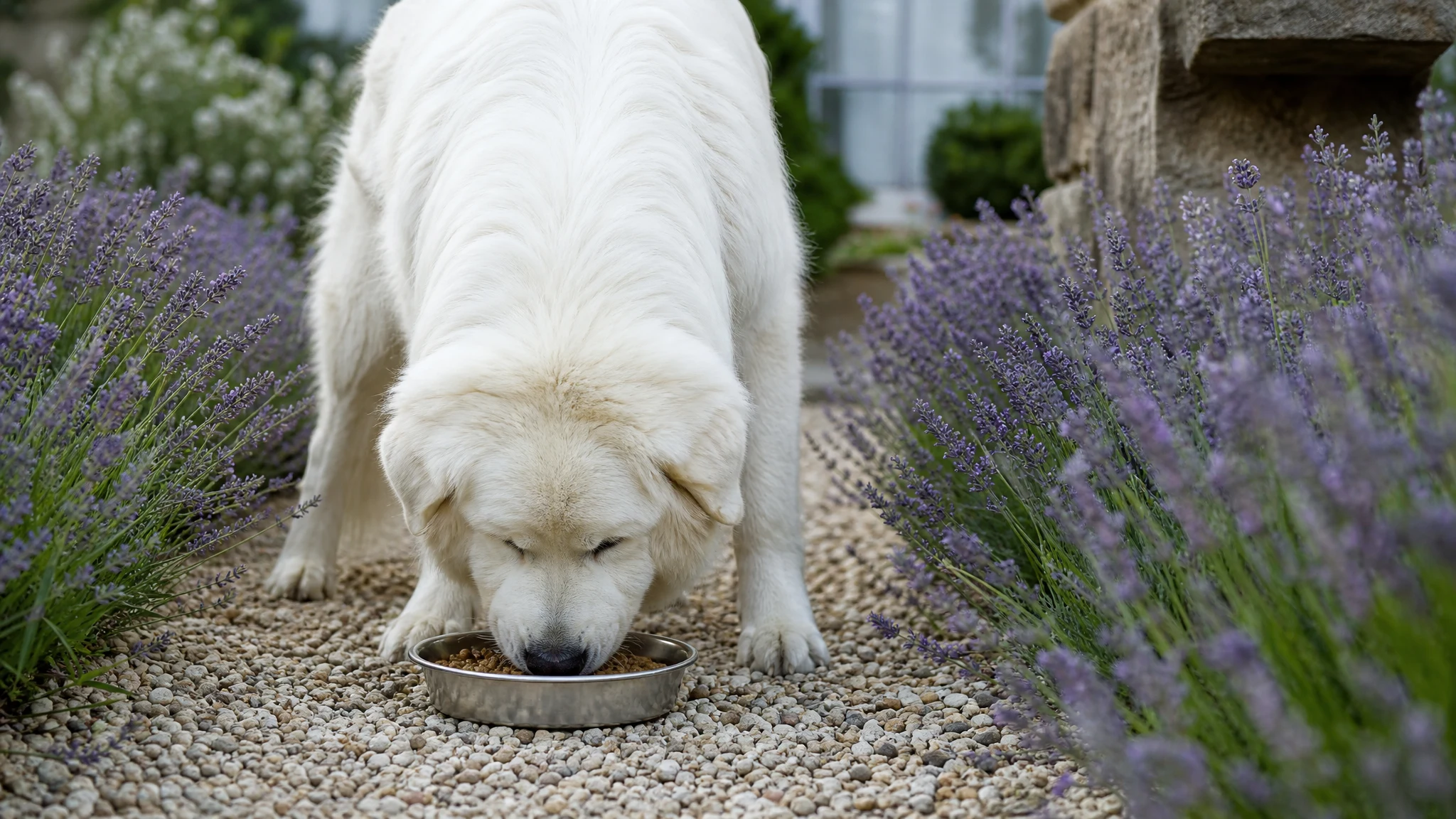
General nutrition information compiled from product labels and published sources, not veterinary advice. Your veterinarian is the right person to choose a diet for your dog, especially one with a health condition.
Good dog nutrition for a Great Pyrenees starts with a few plain decisions: the right life stage, a label you can read, and steady portions. None of it needs to be complicated. It does need some care, because this is a large dog and mistakes in growth or weight add up.
This guide walks through the process in order. It covers what to gather, what to do at each step, and what tends to go wrong. For a deeper look at the factors behind these steps, see the diet factors that matter for Great Pyrenees.
Why Great Pyrenees need a size-aware approach
The Westminster Kennel Club lists the Great Pyrenees as a large breed. The Hill's Pet breed page gives an adult weight of 85 to 120 pounds, with males heavier, and a life expectancy of 10 to 12 years.
That size shapes everything below. Hill's says Great Pyrenees puppies need large-breed nutrition until at least 18 months, and that full adult size can take up to two years. It also notes that calcium and phosphorus ratios matter for bone development. PetMD says the breed generally does well on food formulated for large breeds, and it advises discussing diet with a veterinarian.
What you will need
- Your dog's current weight and age, from a recent vet visit or a home scale reading
- The bag, can or pack of any food you are considering, so you can read the whole label
- A standard measuring cup, or a kitchen scale if the feeding guide uses weight
- A notebook or phone note to track portions, treats and body condition
- A slow-feeder or regular bowl at floor level (more on this under Step 5)
- Your veterinarian's contact details for questions that are specific to your dog
Step 1: Match the food to the life stage
Start with your dog's age. A puppy, a young adult and a senior have different needs, and the label should say which one the food is made for.
For a puppy, look for a large-breed puppy food. The Association of American Feed Control Officials (AAFCO) requires growth and all-life-stages foods to say whether they include or exclude growth of large-size dogs, which means dogs of 70 pounds or more as adults. A Great Pyrenees falls in that class. Choose a label that says "including growth of large-size dogs." This wording comes from a secondary summary of the AAFCO profiles (Dog Food Advisor), so confirm it against the label in your hands.
For an adult, a maintenance or large-breed adult formula is the usual match. Some brands also make giant-breed adult formulas for dogs over 100 pounds.
Step 2: Read the label in four places
Marketing sits on the front of the bag. The facts sit on the back. Check these four spots:
- The AAFCO statement. It should say the food is complete and balanced for your dog's life stage, either by formulation to the AAFCO nutrient profiles or by feeding tests.
- The ingredient list. Ingredients are listed by weight, so the first five tell you the most. Note that fresh meat includes water weight, while "meal" is a dried ingredient.
- The guaranteed analysis. This gives minimum protein and fat and maximum fiber. Some brands show dry matter averages instead, which are not the same thing and should not be compared directly with guaranteed minimums.
- The calories per cup. Foods vary a lot here, so the same cup of two foods can mean very different energy.
Step 3: Compare a few foods on label data only
To show how this works, we compared label data from the brands' own pages. We did not run feeding trials or taste tests, and label data cannot tell you how a food will suit your dog. Treat the table as a reading exercise.
| Food | Life stage | Calories per cup | Label note |
|---|---|---|---|
| Royal Canin Giant Adult Dry | Adult, over 100 lb | 427 kcal ME (calculated) | Protein min 26%, fat min 18% |
| Royal Canin Large Adult Dry | Adult, 56 to 100 lb | 360 kcal ME (calculated) | Protein min 24%, fat min 15% |
| Hill's Science Diet Adult Large Breed Chicken & Barley | Adult | 365 kcal | Dry matter averages shown, not minimums |
| Hill's Science Diet Puppy Large Breed Chicken & Brown Rice | Large-breed puppy | 387 kcal | Dry matter averages shown, not minimums |
| VICTOR Hi-Pro Plus Large Breed Puppy | All life stages | 365 kcal | Protein min 30%, fat min 14% |
Two things stand out. Calories per cup range from 360 to 427 among these dry foods, so a cup is not a universal unit. And the Hill's pages show dry matter averages rather than guaranteed minimums, so a protein number there is not directly comparable with a Royal Canin or VICTOR minimum.
Kibble size was not listed on any of these pages, so check with the brand if it matters for your dog. The brands' own pages are the place to confirm current formulas: Royal Canin, Hill's and VICTOR.
Step 4: Start from the label's feeding guide, then adjust
Every feeding guide is a starting point, not a prescription. Royal Canin's Large Adult page, for example, gives daily amounts by target adult weight and activity level. Hill's pages say to adjust amounts as necessary to maintain optimal weight. VICTOR's page says that for adults over 100 pounds, you increase intake by half a cup for every 20 pounds over 100.
Begin with the guide for your dog's target weight, not the weight of a dog you wish to resemble. Then watch your dog over two to four weeks. Check that you can feel the ribs under a modest layer of coat and muscle, and that energy and stools look steady. Adjust in small steps and ask your veterinarian if you are unsure.
Remember that a thick double coat can hide body condition. Use your hands, not just your eyes.
Step 5: Set up mealtimes with bloat in mind
Bloat, also called gastric dilatation-volvulus (GDV), is life-threatening. PetMD advises feeding multiple small meals, avoiding vigorous exercise around mealtimes, and avoiding raised bowls. It also notes that a gastropexy is often done in connection with GDV. That is a surgical decision for you and your veterinarian.
In practice, that means splitting the daily amount into at least two meals, keeping the hour before and after meals calm, and feeding from a bowl at floor level. If your dog ever has a swollen, tight belly, repeated unproductive retching or sudden restlessness, call a veterinarian or emergency clinic right away.
Step 6: Switch foods slowly
When you change foods, mix the new food into the old over about a week or more, increasing the new share a little each day. A sudden swap often brings loose stools. If trouble lasts more than a day or two, call your vet.
Step 7: Count treats and extras
Treats, chews and table scraps all count toward the day. If you use treats for reward-based training, which is the approach the American Veterinary Society of Animal Behavior (AVSAB) supports, set aside part of the daily food for that purpose. Do not add supplements without your veterinarian's direction.
Fresh and wet foods
Some owners consider fresh or refrigerated foods. Their labels work the same way, but the numbers look different because of water content. Freshpet's Large Dog Multi-Protein Recipe lists 348 kcal per cup. Nom Nom's Beef Mash lists 201 kcal per cup and an all-life-stages statement. JustFoodForDogs' Beef & Russet Potato is labeled for adult maintenance and not for growing puppies.
Because cups hold different calories across these foods, never swap one for another cup for cup. Follow each brand's own guide, and check with the brand if a detail is missing from the page.
Common mistakes to avoid
- Feeding an adult formula to a growing puppy. Hill's says large-breed puppy nutrition should continue until at least 18 months.
- Choosing by the front of the bag. Words like "natural" or "premium" are not a substitute for the AAFCO statement.
- Comparing protein numbers across different formats. A dry matter average and a guaranteed minimum are different measurements.
- Free-feeding a big dog. It makes portions hard to track and works against the small-meal advice for bloat.
- Ignoring calories in treats. They add up faster than most owners expect.
- Treating food as a medical fix. Diet is one part of care, and your veterinarian decides what suits an individual dog. Prescription diets are something only a veterinarian prescribes.
A note on health conditions and diet
Hill's says hip and elbow dysplasia can occur in large dogs, and that controlled growth and moderate exercise support joints. PetMD describes these conditions as hereditary, with exercise, weight and nutrition able to influence them. Hill's also notes that bone cancer is more frequent in giant breeds and that some lines are predisposed to Addison's disease. No food on a shelf prevents or treats these conditions. What you can do is keep your dog lean, grow a puppy steadily and keep up regular exams.
On heart health, the FDA has investigated a possible link between certain diets and canine dilated cardiomyopathy (DCM). Its latest update on that page is dated December 23, 2022, and the agency does not plan further public updates until there is meaningful new scientific information. If you are unsure about your dog's food in light of that, ask your veterinarian.
What to expect
With a suitable life-stage food, measured portions and regular weigh-ins, many owners find that their dog's weight stays steady and mealtimes become predictable. A well-matched diet may also support steady growth in a puppy and healthy body condition in an adult. Results vary by dog, and a change in appetite, stool or weight is a reason to call your veterinarian, not to try another bag.
Revisit the plan at each life stage: at about 18 months to two years when a puppy moves to adult food, and again as your dog ages. Your veterinarian can help time those changes.
Sources
- Westminster Kennel Club, Great Pyrenees breed page
- Hill's Pet, Great Pyrenees breed page
- PetMD, Great Pyrenees breed page
- FDA Center for Veterinary Medicine, diet and canine DCM investigation
- Dog Food Advisor, AAFCO nutrient profiles (secondary)
- Brand product pages: Royal Canin Large Adult, Hill's Puppy Large Breed, Freshpet, Nom Nom, JustFoodForDogs