Dog Probiotics for Gut Health: What the Evidence Says for Great Pyrenees
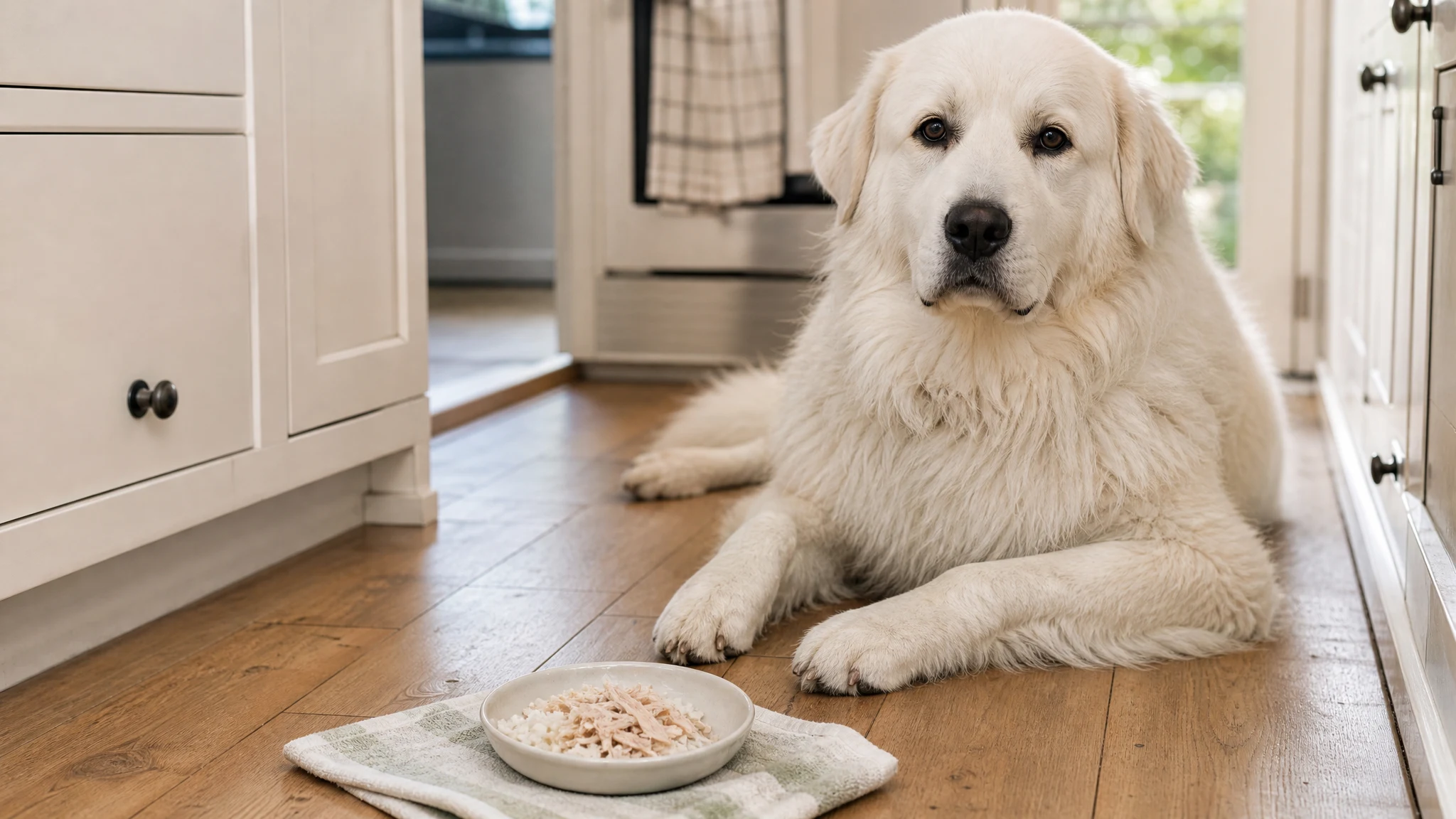
General nutrition information compiled from product labels and published sources, not veterinary advice. Your veterinarian is the right person to choose a diet for your dog, especially one with a health condition.
Probiotics are sold with big promises. For a Great Pyrenees, a large dog with a few breed-specific digestive worries, it pays to read past the front of the package.
This guide walks through dog probiotics for gut health as a practical process. You will learn how to prepare questions for your veterinarian, how to read a label, and how to judge results without overreading them.
One honest note up front. We did not find a probiotic study or recommendation written specifically for Great Pyrenees. So this page does not claim one exists. It uses what the breed sources say about diet and digestion, and it points you to your veterinarian for the rest.
What we can and cannot say about probiotics
Probiotics are live microorganisms added to a product. The idea is that they may support the balance of bacteria in the gut. Whether a given product does that for a given dog depends on the strain, how it was made and stored, and the dog.
We compared label information, not feeding results. We did not feed, test or trial any probiotic. Nothing here says a probiotic prevents, treats or cures a condition. A veterinarian decides what is right for an individual dog.
Why gut health matters for this breed
The Westminster Kennel Club lists the Great Pyrenees as a large breed. Hill's Pet says adults weigh 85 to 120 pounds, with males heavier, and that life expectancy is 10 to 12 years. A dog that size eats a lot, so a food or supplement that upsets the stomach becomes a daily problem fast.
PetMD describes bloat, also called GDV, as life-threatening in this breed. It advises several small meals, avoiding vigorous exercise around mealtimes and avoiding raised bowls. It also notes that a gastropexy is often done in connection with GDV.
This matters for probiotics in one clear way. Bloat is an emergency, not a gut-flora issue. If your dog has a swollen, tight belly, retches without producing anything, or seems in distress, call a veterinarian or emergency clinic right away. Do not try a supplement.
Materials you need
- Your dog's current food bag or can, with the full label, including the ingredient list and the AAFCO statement.
- Any probiotic or supplement packaging you are considering.
- A simple notebook or phone note for stool, appetite and energy observations.
- Your dog's current weight, ideally from a recent vet visit.
- A list of questions for your veterinarian (the steps below build it).
Step-by-step: how to approach probiotics
Step 1: Confirm the base diet is right first
A probiotic cannot fix a food that does not suit the dog. Start by checking the life stage match.
Hill's says Great Pyrenees puppies need large-breed nutrition until at least 18 months, and that full adult size can take up to two years. Hill's also says calcium and phosphorus ratios matter for bone development. PetMD says the breed generally does well on food formulated for large breeds.
On the label, look for an AAFCO statement. According to the Dog Food Advisor, growth and all-life-stages foods must say whether they include or exclude growth of large-size dogs, meaning 70 pounds or more as an adult. A Great Pyrenees falls in that class, so a puppy food should say "including growth of large-size dogs." We could not confirm AAFCO's specific calcium limit from an opened page, so ask your veterinarian or the brand about it.
For more on the wider picture, see our guide to Great Pyrenees nutrition and the diet factors that matter.
Step 2: Write down what you actually see
For one to two weeks, record stool quality, how often your dog goes, gas, appetite and any vomiting. Note any recent change in food, treats, water source or stress.
This record is the most useful thing you can bring to an appointment. It turns "his stomach seems off" into something a veterinarian can work with.
Step 3: Rule out the problems a probiotic should not cover
Persistent diarrhea, blood in the stool, repeated vomiting, weight loss or lethargy need a veterinary exam. A supplement can hide the pattern or delay care.
Breed sources list several conditions that call for vet oversight rather than home fixes. Hill's mentions hip and elbow dysplasia, osteosarcoma and, in some lines, Addison's disease. PetMD lists bloat. None of these is a probiotic matter, and no food or supplement should be expected to prevent or treat them.
Step 4: Ask your veterinarian specific questions
Bring your notes and ask:
- Does my dog's pattern suggest a probiotic is worth trying, or should we look for another cause?
- Which form makes sense, a veterinary product, a food that already includes one, or none?
- How long should a trial last before we decide it is not helping?
- Does anything about my dog's current diet, weight or health history change your advice?
Amounts are the veterinarian's call and the product's label. This page gives no doses.
Step 5: Read the probiotic label like an ingredient list
Look for these items, and be skeptical when they are missing:
- Named strains. A label that says only "probiotic blend" tells you little. Specific genus, species and strain names are a better sign.
- Live counts at the end of shelf life. A count "at time of manufacture" says less than one guaranteed through the expiration date.
- Storage directions. Some products need refrigeration. Follow them.
- The brand's own page. Check the maker's site for strain details and contact information. If the brand does not publish them, ask the brand directly.
Be wary of labels promising to "cure," "fix" or "prevent" a health problem. A product that makes disease claims is a red flag, and the FDA treats products with disease claims differently from ordinary foods.
Step 6: Introduce one change at a time
If your veterinarian agrees to a trial, change only one thing. Do not start a new food, new treats and a probiotic in the same week. Otherwise you cannot tell what caused a change, good or bad.
Keep meals small and regular. PetMD's bloat guidance of multiple small meals fits here too, and a calm routine around mealtimes helps any dog's digestion.
Step 7: Track and review
Keep your notes going through the trial. At the end of the period your veterinarian suggested, compare the before and after pages. Share them at the next visit and decide together whether to continue, change or stop.
Tips
- Many foods and supplements list the same few common strains, so compare strain names, not marketing words.
- Keep the original packaging so you have the lot number and expiration date if a problem comes up.
- Weigh your dog regularly. For a large breed, steady weight is a useful sign that a diet is working overall.
- Mention every product your dog gets, including chews, toppers and fresh food, when you talk to your veterinarian.
Common mistakes to avoid
- Treating a probiotic as a cure. It is not a substitute for a diagnosis.
- Switching foods too fast. A sudden change can upset a dog's stomach on its own, which muddies your results.
- Ignoring the DCM conversation. The FDA's investigation into a possible link between certain diets and canine dilated cardiomyopathy is still on its site. Its latest update there is dated December 23, 2022, and the FDA says it does not plan further public updates until there is meaningful new scientific information. If you are weighing a diet change, ask your veterinarian rather than relying on a trend.
- Using human products. Do not give your dog a human probiotic without asking a veterinarian, since those products may contain other ingredients.
- Waiting out an emergency. Bloat signs need immediate care, not a supplement.
Expected results, realistically
Some owners and veterinarians report that a probiotic seems to go along with firmer stools or less gas in some dogs. Others see no change. The evidence is mixed, and results vary by product and by dog.
If your Great Pyrenees does well, you may notice more consistent stools or a steadier appetite over a few weeks. That would be an observation, not proof the product caused it. If nothing changes, or your dog gets worse, stop and call your veterinarian.
No source we relied on makes a Great Pyrenees-specific probiotic promise, and we will not make one either.
The short version
- Get the base diet right for the life stage and large-breed size.
- Record what you see.
- Have a veterinarian rule out problems that need real care.
- Read strain names, counts and storage on the label.
- Change one thing at a time and review the results.
Probiotics for gut health can be a reasonable thing to discuss, but they work best as one small part of a well-chosen diet and regular veterinary care.