Human Foods Great Pyrenees Should Never Eat
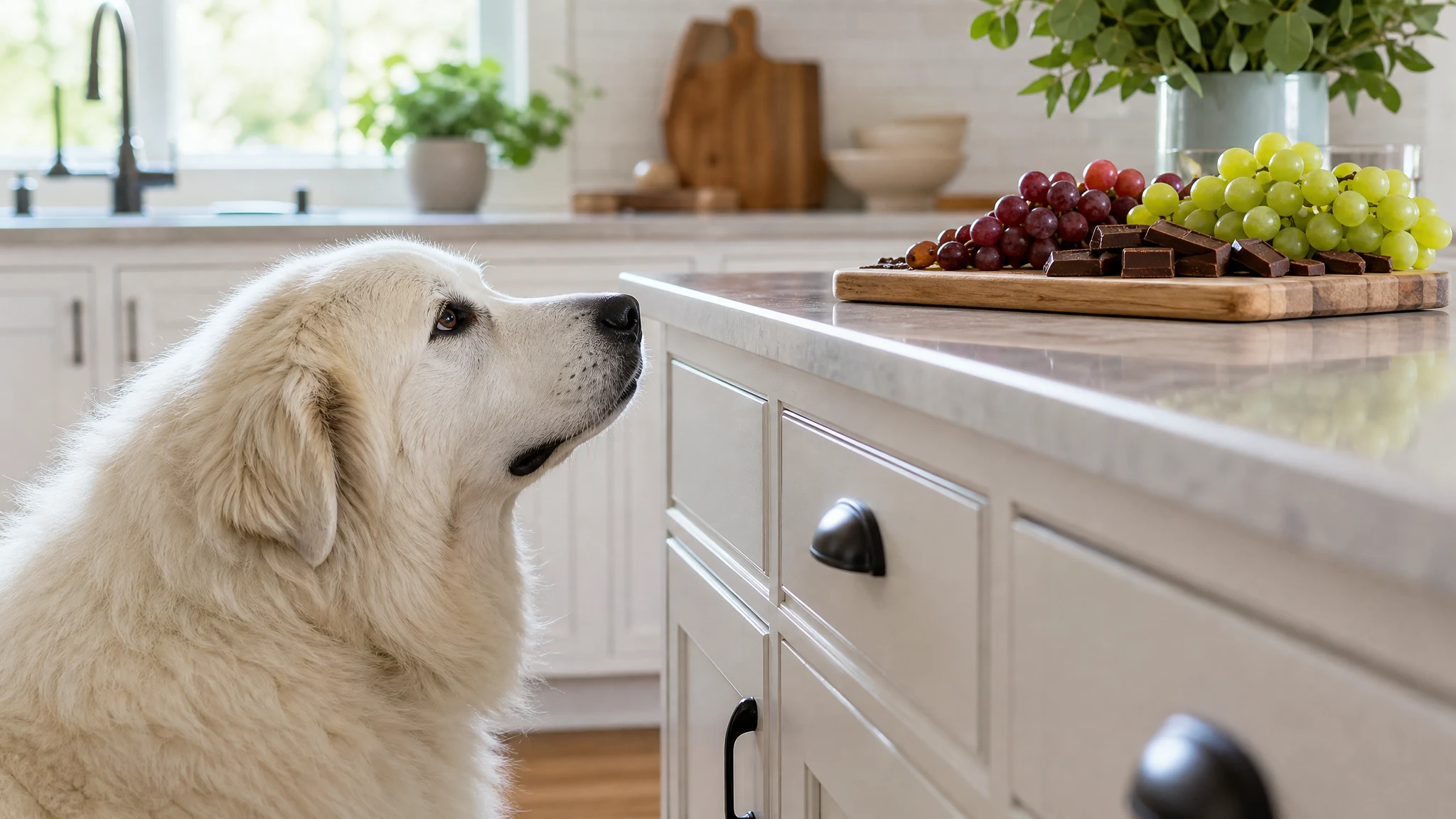
General nutrition information compiled from product labels and published sources, not veterinary advice. Your veterinarian is the right person to choose a diet for your dog, especially one with a health condition.
A Great Pyrenees is a big dog, and the Hill's Pet breed page lists adults at 85 to 120 pounds. Size does not make a dog immune to kitchen hazards. Many human foods that harm small dogs can also make a large dog seriously ill.
This page answers common questions about human foods dogs can't eat, what a Great Pyrenees can nibble safely, and what to do if something goes wrong. The toxic foods named here appear on the ASPCA Animal Poison Control list of foods to keep away from pets. We give no doses on purpose. With a toxin, the safe amount for your dog is a question for a professional, not a chart.
The Basics
What can Great Pyrenees not eat?
The ASPCA Animal Poison Control list names chocolate, grapes and raisins, xylitol, onions and garlic, macadamia nuts and alcohol, among others. Each is covered below. Cooked bones, very fatty scraps and heavily seasoned leftovers are also poor choices.
Are the toxic foods different for a Great Pyrenees than for other dogs?
We found no breed-specific toxic food list for the Great Pyrenees. The ASPCA list applies to dogs in general. If you wonder about your own dog's sensitivities, ask your veterinarian.
Does a big dog tolerate more of a toxic food?
Do not count on it. Some foods, such as xylitol and grapes, are a concern at any size, and a dog's individual reaction can vary. Treat every toxic food as a reason to call for advice, whatever your dog weighs.
Can Great Pyrenees eat table scraps?
Occasional plain, safe items are fine for most dogs. Scraps often carry onion, garlic, salt, butter or sweeteners, though. Keeping scraps off the menu is the simplest way to avoid trouble.
Sweets, Baking and Drinks
Why is chocolate dangerous?
Chocolate contains compounds called methylxanthines, which dogs process slowly. Darker and baking chocolate are generally considered more concerning than milk chocolate. Call for advice if your dog eats any.
What is xylitol and where is it found?
Xylitol is a sugar substitute. It turns up in sugar-free gum, some candies, baked goods and certain peanut butters. The ASPCA lists it as toxic to dogs, so read the label before you share anything marked sugar-free.
Is peanut butter safe?
Plain peanut butter is not on the ASPCA toxic list, but the label matters. If xylitol appears in the ingredients, do not give it. Keep portions small, because it is rich and fatty.
Can a Great Pyrenees have alcohol or raw yeast dough?
No. Alcohol is on the ASPCA list, and that includes drinks, some desserts and anything left in an unattended glass. Raw yeast dough is also listed as a hazard, so keep rising bread out of reach.
What about coffee, tea and energy drinks?
Caffeine is another methylxanthine, so the ASPCA advises keeping coffee, tea and caffeinated products away from pets. Used coffee grounds and tea bags in an open trash can are a common problem. A tall dog can reach a counter easily.
Fruits, Vegetables and Nuts
Can Great Pyrenees eat grapes or raisins?
No. The ASPCA lists grapes and raisins as toxic to dogs, and the cause is not fully understood. That uncertainty is why even a few are treated as a reason to call for advice. Watch for raisins hidden in cookies, cereal and trail mix.
Are onions and garlic really a problem?
Yes. The ASPCA lists onions, garlic, chives and leeks as harmful to dogs, whether raw, cooked or powdered. They can damage red blood cells. Many soups, sauces and seasoned meats contain them.
Which nuts are unsafe?
Macadamia nuts are on the ASPCA toxic list. Other nuts are often salted, seasoned or coated, and they are rich and fatty. It is easiest to keep all nuts out of the treat routine.
Is avocado okay?
The ASPCA advises caution with avocado, because the plant contains a substance called persin. The large pit is also a choking and blockage risk. For a large dog that gulps food, skipping it is the safer choice.
What about corn on the cob, fruit pits and cooked bones?
These are physical hazards more than poisons. Cobs, pits and cooked bones can lodge in the throat or gut or splinter. Large dogs swallow big pieces, so keep them out of the trash too.
Fatty, Salty and Seasoned Foods
Why are fatty foods like bacon and trimmings a risk?
Very fatty foods can upset the stomach, and the ASPCA warns that they may trigger pancreatitis in some dogs. Holiday roasts, bacon grease and fried leftovers are the usual culprits. If your dog vomits or seems painful after a rich meal, call your veterinarian.
Is salty food a concern?
Too much salt is on the ASPCA list of things to avoid. Chips, cured meats and salty snacks are poor treats. Fresh water should always be available.
Does meal timing matter for a deep-chested dog?
It can. The PetMD breed page describes bloat, or GDV, as life-threatening in the Great Pyrenees. It advises several small meals, avoiding vigorous exercise around mealtimes and avoiding raised bowls. A big plate of leftovers is the opposite of that advice, so ask your veterinarian about prevention.
Safe Snacks and Everyday Food
What can Great Pyrenees eat as a snack?
Plain, unseasoned items in small pieces are the usual starting point. Examples are cooked plain chicken, carrot pieces or green beans. Introduce one new food at a time and check the ASPCA list first. Your veterinarian can tell you what suits your dog.
Can Great Pyrenees eat human food instead of dog food?
Not as a replacement. A complete dog food carries an AAFCO statement saying it is formulated for a life stage. The Hill's Pet breed page notes that Great Pyrenees puppies need large-breed nutrition until at least 18 months. Our label-by-label dog food comparison shows how we looked at the label data. We compared labels only, and we ran no feeding trials or taste tests.
If Your Dog Eats Something Unsafe
What should I do first?
Take the food away and keep your dog calm. Then contact your veterinarian or the ASPCA Animal Poison Control Center right away. Look up the current number on the ASPCA's own website, and ask what fees apply.
What should I tell them?
Be ready with what your dog ate, roughly how much, and when. Have the package or label handy. Mention your dog's weight and age, and any symptoms you see.
Should I make my dog vomit?
Do not try this at home unless a veterinarian or poison control specialist tells you to. The right step depends on what was eaten and when. Follow their instructions exactly.
A Final Word
Most trouble comes from open trash cans, unattended counters and well-meaning guests. A few house rules prevent most of it. Keep the toxic foods listed above out of reach, and ask guests not to share snacks.
Sources
- Hill's Pet breed page: Great Pyrenees
- PetMD breed page: Great Pyrenees
- Westminster Kennel Club breed page: Great Pyrenees
For the full toxic foods list and poison control contact details, see the ASPCA Animal Poison Control section of the ASPCA website.