Is 4Health Dog Food a Good Fit for a Great Pyrenees?
General nutrition information compiled from product labels and published sources, not veterinary advice. Your veterinarian is the right person to choose a diet for your dog, especially one with a health condition.
There is no honest yes or no for a whole brand. 4Health dog food comes in several formulas, and each one has its own label. A Great Pyrenees needs a specific kind of label. So the useful question is whether the formula in your hand meets that dog's needs.
This guide shows you how to check any 4Health bag, step by step. The same method works for any other brand. We compared label data and published breed sources. We did not run feeding trials or taste tests, and we do not describe 4Health ingredients or numbers here. For those, read the bag and the brand's own product page.
Why this breed changes the label check
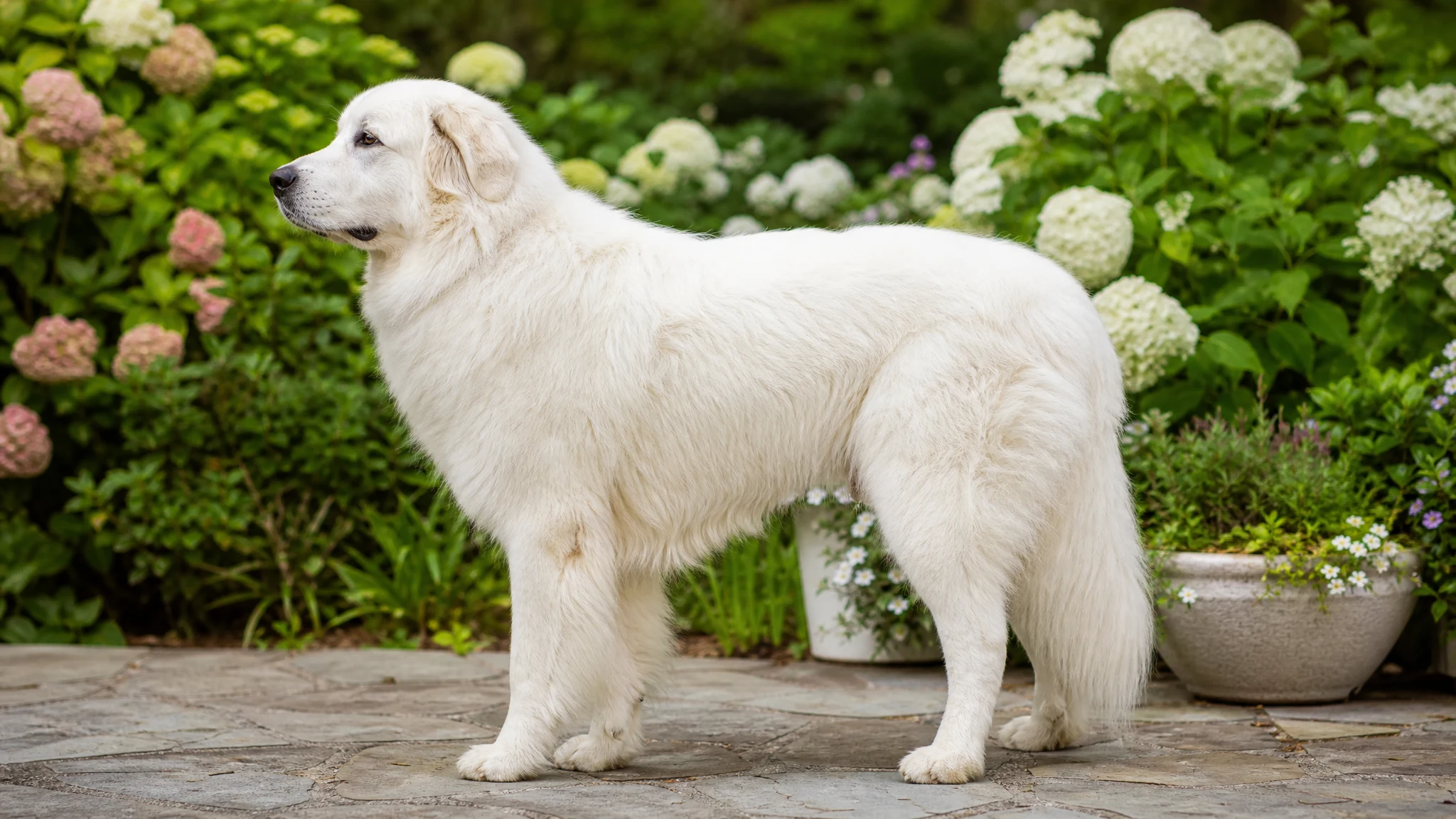
The Westminster Kennel Club lists the Great Pyrenees as a large breed. Hill's Pet says adults weigh 85 to 120 pounds, with males heavier. It gives a life expectancy of 10 to 12 years.
Hill's also says these puppies need large-breed nutrition until at least 18 months. Full adult size can take up to two years. It adds that calcium and phosphorus ratios matter for bone development. PetMD says the breed generally does well on food formulated for large breeds, and it advises talking to a veterinarian about diet.
For more on the wider picture, see Great Pyrenees nutrition and the diet factors that matter.
Materials you need
- The actual bag or can of the 4Health formula you are considering, or its full product page from the brand.
- Your dog's age and a recent weight from your veterinarian's scale.
- A pen and paper, or a notes app, to record what the label says.
- A list of questions for your veterinarian.
Step 1: Match the life stage to your dog
Find the line that begins "formulated to meet the nutritional levels established by the AAFCO Dog Food Nutrient Profiles for..." It ends with a life stage. The options are growth, maintenance, or all life stages.
For a puppy, look for growth or all life stages. For an adult, maintenance or all life stages is the usual wording. A puppy on a maintenance-only food is a mismatch. An adult can eat some growth foods, but that is a question for your veterinarian.
Step 2: Look for the large-size growth wording
A Great Pyrenees puppy needs one more check. Dog Food Advisor, a secondary source summarizing the AAFCO profiles, explains that growth and all-life-stages foods must state whether they include or exclude growth of large-size dogs. That class means dogs of 70 pounds or more as adults. A Great Pyrenees falls in it.
Look for the phrase "including growth of large-size dogs." If the label says "excluding," it is not meant for a growing Great Pyrenees puppy. We could not confirm the exact calcium limit from AAFCO's own documents, so ask the brand or your veterinarian instead of trusting a number you find in a forum.
Step 3: Write down the label data
Copy the numbers you need into one place. Use the table below as a template.
| Label item | What to record |
|---|---|
| AAFCO statement | Life stage and whether large-size growth is included |
| First five ingredients | Exact order as printed |
| Guaranteed analysis | Minimum protein and fat, maximum fiber |
| Calories | kcal per cup, as stated |
| Feeding guide | Amount for your dog's weight, as a starting point |
| Grain-free claim | Yes or no, as printed |
Do not fill in blanks from memory or from a retailer listing. If a number is missing from the bag, check the brand's own product page or contact the company.
Step 4: Compare it with a size-matched example
Comparing helps you see what "large-breed" labels look like. Royal Canin's Giant Adult Dry page, for example, targets dogs over 100 pounds. It lists a maintenance AAFCO statement and 427 kcal per cup as fed, calculated. Hill's Puppy Large Breed Chicken & Brown Rice page covers large-breed puppies up to 18 months and lists 387 kcal per cup.
These are examples of the data to look for, not endorsements. A food can differ a lot in calories per cup, so the same cup of two foods is not the same amount of energy. Check that your 4Health formula states its calories the same way.
Step 5: Check the feeding guide as a starting point
Label feeding charts are starting points. Hill's says to adjust amounts as needed to maintain optimal weight. Your dog's activity, age and body condition all matter.
Bloat, also called GDV, is a serious concern in this breed. PetMD describes it as life-threatening. It advises multiple small meals, avoiding vigorous exercise around mealtimes, and avoiding raised bowls. It also notes that a surgery called gastropexy is often done as a safeguard against GDV. Ask your veterinarian how to split your dog's daily food. No food label can promise to prevent bloat.
Step 6: Take your notes to your veterinarian
Bring the completed table. Ask whether the formula suits your dog's age, weight and health history. Hill's notes that hip and elbow dysplasia can occur in large dogs. It says controlled growth and moderate exercise support joints. PetMD says these conditions are hereditary, and that exercise, weight and nutrition can influence them.
Hill's also lists osteosarcoma, a bone cancer more common in giant breeds, and notes that some lines are predisposed to Addison's disease. A food does not treat any of these. Only a veterinarian can say what an individual dog needs. Prescription diets are something a veterinarian prescribes.
Step 7: Transition slowly and watch your dog
If you and your veterinarian choose the food, change over gradually. Mix a little of the new food into the old and shift the balance over a number of days. Your veterinarian can give you a schedule that suits your dog.
Watch stool quality, appetite, energy and body condition. Weigh the dog on a regular schedule and note the results.
About the FDA and grain-free formulas
Some 4Health formulas may be grain-free, and others may not be. Check each label. The FDA has investigated a possible link between certain diets and canine dilated cardiomyopathy (DCM). The latest update on its page is dated December 23, 2022. The FDA says it does not plan further public updates until there is meaningful new scientific information.
That means the question is unsettled. If a formula is grain-free, ask your veterinarian about it. Do not assume grain-free is better.
Tips and common mistakes
- Judging by the front of the bag. Marketing words are not label statements. Read the AAFCO line.
- Using a small-breed or general puppy formula. Check for the large-size growth wording.
- Switching to an adult food too early. Hill's says large-breed puppy nutrition should continue until at least 18 months.
- Treating the feeding chart as fixed. It is a starting point. Adjust with your veterinarian's guidance.
- Adding supplements to fix a gap. Extra calcium or other additions can upset a balanced diet. Ask your veterinarian first.
- Trusting a retailer page over the bag. Formulas change. The bag in your hand is the current record.
What to expect
If you follow these steps, you may end up with a clearer, more informed choice. A formula that matches your dog's life stage and size class may help you feed with more confidence. It may also make it easier to talk with your veterinarian. Results vary from dog to dog, and no food guarantees any health outcome.
If a 4Health formula states a growth or all-life-stages claim that includes large-size dogs, it clears one important hurdle for a puppy. If it is a maintenance food for adults, it needs to match your dog's weight and condition. If the label is unclear, contact the brand directly.
Sources
- Westminster Kennel Club, Great Pyrenees breed page
- Hill's Pet, Great Pyrenees breed page
- PetMD, Great Pyrenees breed page
- FDA Center for Veterinary Medicine, investigation of diets and canine DCM
- Dog Food Advisor, AAFCO nutrient profiles (secondary source)
- Royal Canin, Giant Adult Dry product page
- Hill's Science Diet, Puppy Large Breed product page