Is Health Extension Dog Food a Good Fit for a Great Pyrenees?
General nutrition information compiled from product labels and published sources, not veterinary advice. Your veterinarian is the right person to choose a diet for your dog, especially one with a health condition.
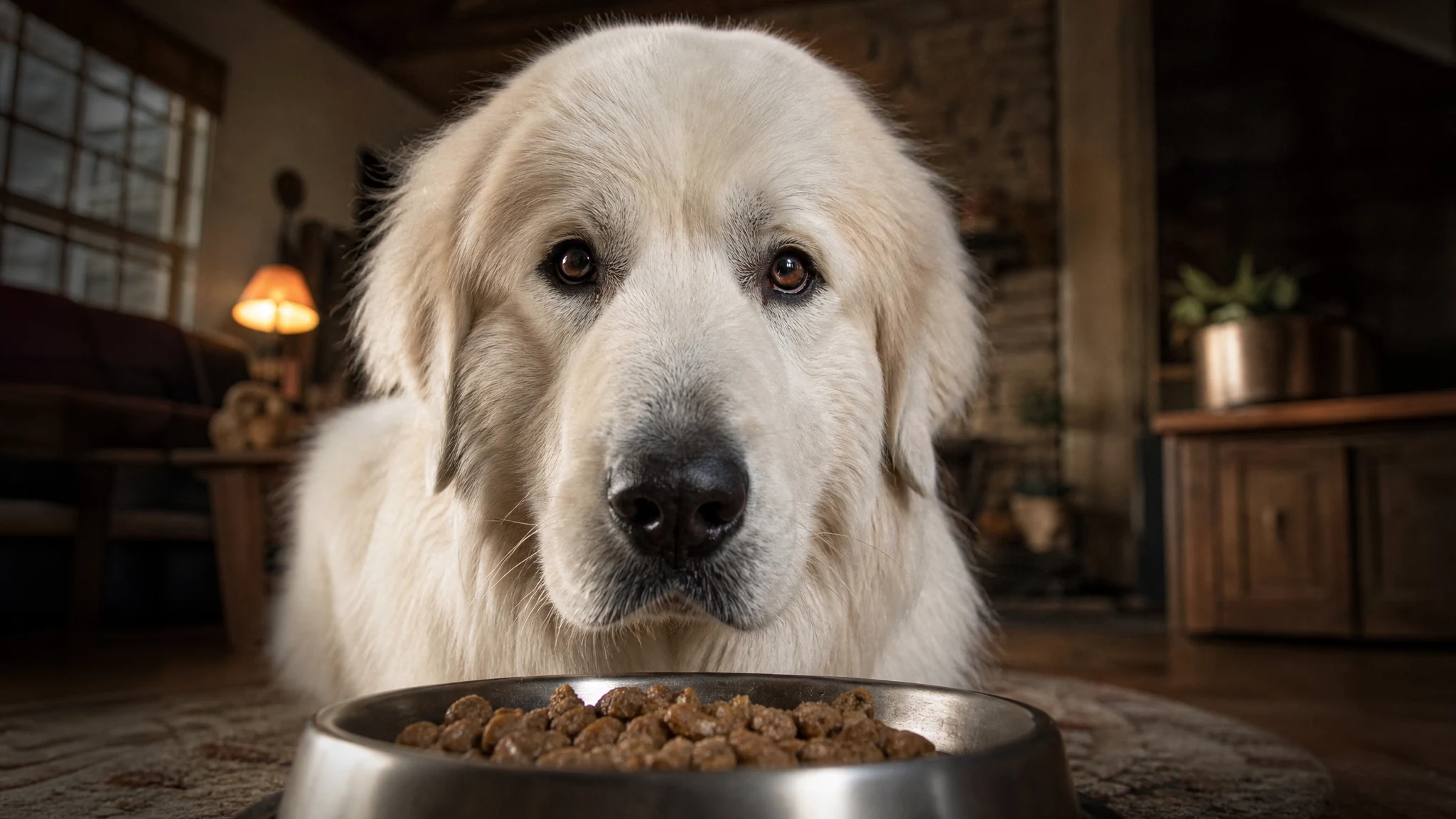
Health extension dog food is a brand some Great Pyrenees owners ask about. The honest answer is that no brand is a good fit or a bad fit in the abstract. The fit depends on the exact recipe, the life stage on the label, and your own dog.
This guide shows you how to check any recipe from the brand against what a Great Pyrenees needs. We did not feed, test or taste any food. We did not run feeding trials. We compared label data published by the brands and breed information from named sources. We also do not have label data for the brand's recipes, so you will need to pull that from the brand's own website and apply the steps below.
What a Great Pyrenees Needs From a Food
The Westminster Kennel Club lists the Great Pyrenees as a large breed. Hill's Pet gives the adult weight as 85 to 120 pounds, with males heavier, and a life expectancy of 10 to 12 years.
Hill's also says the breed needs large-breed puppy nutrition until at least 18 months, and that full adult size can take up to two years. It notes that calcium and phosphorus ratios matter for bone development.
PetMD says the breed generally does well on food formulated for large breeds, and that you should talk about diet with a veterinarian. For a wider look at the topic, see our guide to the diet factors that matter for Great Pyrenees.
Materials You Need
- The full product page for the recipe you are considering, from the brand's own website
- A photo of the bag or can label, including the small print
- Your dog's age, current weight and body condition notes from your vet
- A kitchen scale and a measuring cup
- A notepad for comparing two or three recipes side by side
Step 1: Match the Recipe to Your Dog's Life Stage
Start with the life stage, because it is the most common mistake. A puppy and an adult have different needs, and a Great Pyrenees stays a puppy for longer than many owners expect.
For a puppy, look for a recipe made for large-breed puppies. For an adult, look for a recipe made for adult maintenance or for all life stages. Hill's advises large-breed puppy nutrition until at least 18 months, so a general puppy food is not a safe shortcut.
For comparison, Royal Canin sells a Giant Puppy formula for dogs expected to pass 100 pounds, and Hill's Science Diet sells a Large Breed Puppy recipe. These show what a size-specific puppy label looks like. Whether a Health Extension recipe has similar wording is something to confirm on the brand's page.
Step 2: Read the AAFCO Statement Closely
The AAFCO statement on the label tells you which life stage the food was formulated or tested for. For growth and all-life-stages foods, the label should say whether it includes or excludes growth of large-size dogs, which AAFCO defines as 70 pounds or more as an adult. A Great Pyrenees at 85 to 120 pounds falls in that class.
So for a puppy, choose a label that says the food covers growth including large-size dogs. Dog Food Advisor, a secondary source, explains this wording. We could not confirm the exact calcium limit from AAFCO's own documents, so ask your veterinarian or the brand if you want that detail.
Also note whether the statement says "formulated to meet" or "feeding tests substantiate". These are two different ways a food can be backed. Neither is a promise about how your dog will do.
Step 3: Read the Ingredient List Without Marketing Filters
Ingredients are listed by weight before cooking, so the first five tell you the most. Write down the first five for each recipe you compare.
Be skeptical of front-of-bag claims such as "natural" or "premium". They are not a substitute for the statement in Step 2. A named protein like chicken or chicken meal is easier to understand than a vague term.
For reference, the first five ingredients of Hill's Science Diet Adult Large Breed Chicken & Barley are chicken, cracked pearled barley, brown rice, brewers rice and whole grain wheat. Royal Canin Giant Adult starts with chicken by-product meal, brewers rice, chicken fat, brown rice and corn protein meal. Both are labeled grain-inclusive. Use lists like these as a pattern for your own notes, not as a verdict.
Step 4: Compare the Guaranteed Analysis and Calories
Find the minimum protein and fat and the maximum fiber on the label. Then find the calories per cup. Calories matter for a large dog, because weight gain adds load to the joints.
Hill's says hip and elbow dysplasia can occur in large-breed dogs, and that controlled growth and moderate exercise support joints. PetMD describes both conditions as hereditary and says exercise, weight and nutrition can influence them. No food prevents or treats them, so use these points to keep your dog lean, and leave anything beyond that to your vet.
Some brands list dry matter averages instead of guaranteed minimums. Do not compare a dry matter figure with an as-fed minimum. They are different measures. Put each on its own line in your notes.
As a calorie reference, label data show 360 kcal per cup for Royal Canin Large Adult and 365 kcal per cup for Hill's Science Diet Adult Large Breed. Calorie density varies, so the same cup of two foods does not feed your dog the same amount of energy.
Step 5: Plan Meals Around Bloat Risk
PetMD describes bloat, also called GDV, as life-threatening in this breed. It advises several small meals, avoiding vigorous exercise around mealtimes and avoiding raised bowls. It also says a gastropexy is often done to help prevent GDV, which is a question for your veterinarian.
This is about how you feed, not only what you feed. Whatever recipe you pick, split the daily amount into smaller meals and keep the area calm afterward. Know the emergency signs and the number of your nearest emergency clinic before you need it.
Step 6: Use the Label Feeding Guide as a Starting Point
Every brand prints a feeding guide. Treat it as a starting point, not a target. Hill's, for example, tells owners to adjust amounts as necessary to maintain optimal weight.
Weigh the portion rather than eyeballing a scoop. Check your dog's body condition every couple of weeks. If you can no longer feel the ribs under a light covering, or your dog looks leaner than your vet advised, adjust and talk to your vet.
VICTOR's large breed puppy page, as an example, gives breed-specific charts by age and weight. If the Health Extension page does something similar, use the chart for your dog's expected adult weight, not the weight of a smaller breed.
Step 7: Transition Slowly and Watch
Switch foods over about a week or longer, mixing a little more of the new food each day. A sudden change can upset the stomach of any dog.
Watch stool quality, appetite, energy, coat and weight. Keep notes. If something looks off, pause and call your veterinarian rather than trying another food on your own.
Tips and Common Mistakes
- Assuming a general puppy food is fine. Great Pyrenees puppies need large-breed nutrition until at least 18 months, according to Hill's.
- Choosing by ingredient trends. Grain-free or novel-protein labels are not the same as suitable. The FDA's page on diets and canine dilated cardiomyopathy carries a latest update dated December 23, 2022, and says the agency does not plan further public updates until there is meaningful new scientific information. Ask your vet how it applies to your dog.
- Skipping the AAFCO line. If the statement does not match your dog's life stage, move on.
- Feeding one big meal. Given the bloat concern above, smaller meals are the safer pattern.
- Adding supplements without advice. Ask your veterinarian first. Do not guess at amounts.
- Changing several things at once. Change the food only, so you can tell what caused any change.
Expected Results
If a recipe suits your dog and you feed it sensibly, you may see steady appetite, firm stools, a healthy coat and a stable body weight. These are signs to watch for, not promises. Results vary by dog.
Food does not prevent, treat or cure hip or elbow dysplasia, bloat, bone cancer or Addison's disease. Hill's lists osteosarcoma as more frequent in giant breeds and Addison's disease as a predisposition in some lines, and it advises regular exams. A veterinarian decides what is right for an individual dog, including any prescription diet.
So Is It a Good Fit?
It can be, if the specific recipe matches your dog's life stage, the AAFCO statement covers large-size dogs where it applies, the calories suit your dog's weight, and your vet agrees. We have no label data for these recipes, so confirm every detail on the brand's own website before you buy, and use the seven steps above to decide.
Sources
- Westminster Kennel Club: Great Pyrenees breed page
- Hill's Pet: Great Pyrenees breed page
- PetMD: Great Pyrenees breed page
- FDA Center for Veterinary Medicine: diets and canine dilated cardiomyopathy
- Dog Food Advisor: AAFCO nutrient profiles
- Royal Canin: Giant Adult Dry
- Hill's Science Diet: Adult Large Breed
- VICTOR: Hi-Pro Plus Large Breed Puppy