Is Iams Proactive Health a Good Fit for a Great Pyrenees?
General nutrition information compiled from product labels and published sources, not veterinary advice. Your veterinarian is the right person to choose a diet for your dog, especially one with a health condition.
Many owners ask whether iams proactive health dog food suits a Great Pyrenees. The honest answer is that the bag itself decides it, not the name on the front. This guide shows you how to read that bag and judge it for this breed.
We did not feed, test or taste any food. We have no Iams label data to quote here, so we will not describe its ingredients, protein, calories or price. What we can do is give you a method and the breed facts to hold the label up against.
What a Great Pyrenees needs from a food label
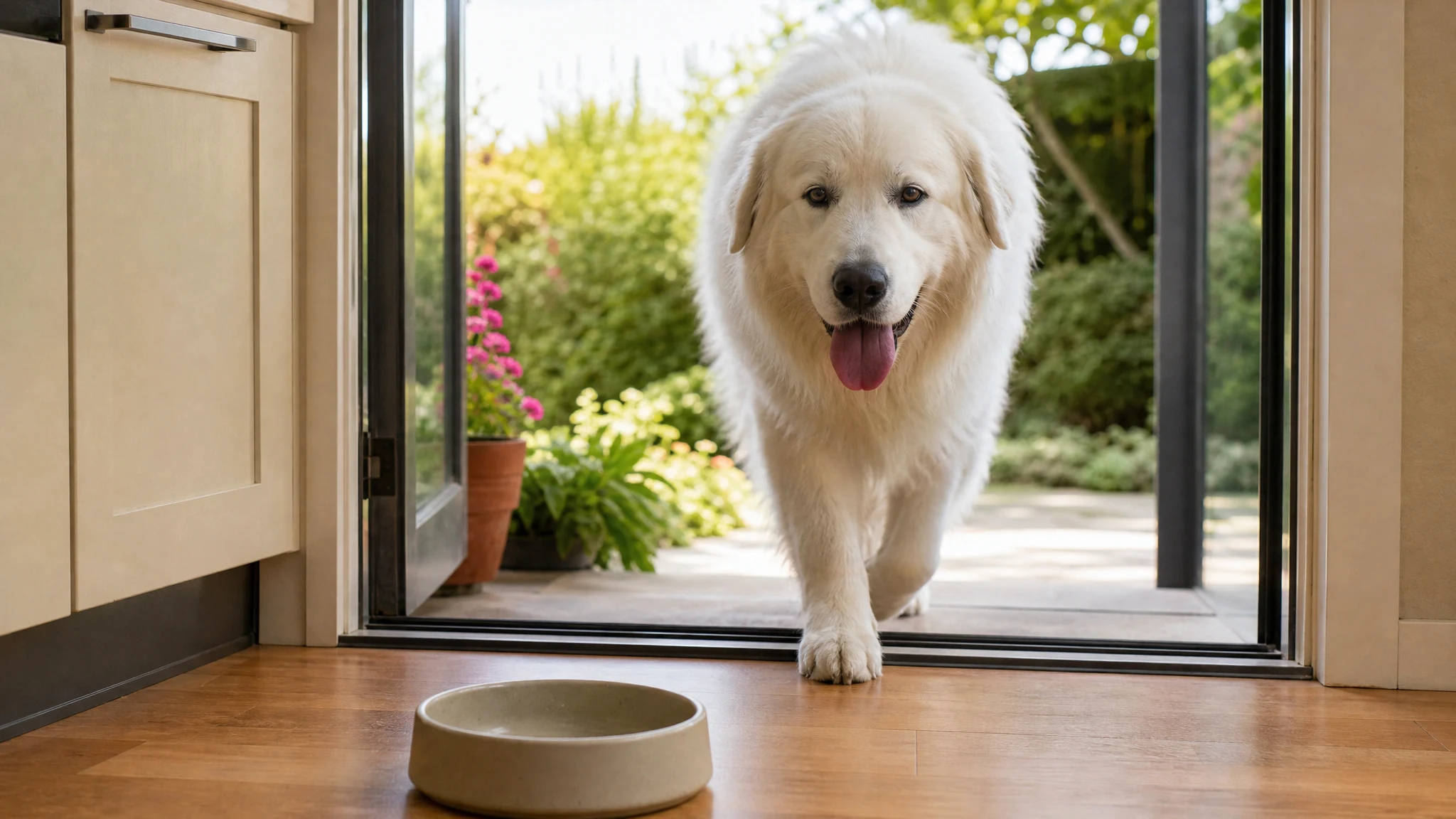
The Westminster Kennel Club lists the Great Pyrenees as a large breed. Hill's Pet gives the adult weight as 85 to 120 pounds, with males heavier, and a life expectancy of 10 to 12 years.
Those numbers matter because many dog foods are sorted by size. A food made for small or medium dogs may be balanced differently from one made for a dog this big.
For a deeper look at the bigger picture, see our guide to the diet factors that matter for a Great Pyrenees.
Materials you need
- The bag or the full product page for the Iams Proactive Health formula you are considering (check which life stage and size it is for)
- Your dog's age and a recent weight from your veterinarian
- A pen and paper, or a notes app, for side-by-side comparison
- The name of the food your dog eats now, if you are switching
- A list of questions for your veterinarian
Step 1: Match the food to your dog's life stage
Start with age. Hill's Pet says Great Pyrenees puppies need large-breed nutrition until at least 18 months, and that full adult size can take up to two years.
So a puppy under 18 months should be on a food made for large-breed growth. An adult can move to an adult formula. A food labeled for all life stages is a separate case, covered in step 2.
Check that the Iams formula in your hand names the life stage you actually need. If it does not, it is not the right bag, however good the brand.
Step 2: Find the AAFCO adequacy statement
The adequacy statement is usually a small paragraph on the back or side of the bag. It says whether the food is complete and balanced, and for which life stage.
Dog Food Advisor explains that growth and all-life-stages foods must say whether they include or exclude growth of large-size dogs, meaning dogs of 70 pounds or more as adults. A Great Pyrenees falls in that class.
For a puppy, look for wording like "including growth of large-size dogs." If the statement says growth "except for large-size dogs," or does not mention size, ask the brand directly before buying.
For an adult, a statement for "maintenance" is the usual match.
Step 3: Read the ingredient list and guaranteed analysis
Ingredients are listed by weight, so the first five tell you the most. Write them down. Then note the minimum protein and fat and the maximum fiber from the guaranteed analysis.
Do not judge a food by one flashy ingredient. A named meat first on the list sounds good, but the full list and the statement matter more. Marketing words like "proactive" are not a nutrient standard, so look past them to the numbers.
It helps to have a yardstick. Here are the kinds of data brands publish for large-breed foods, taken from the brands' own pages:
| Food (brand page data) | Life stage | Calories listed |
|---|---|---|
| Royal Canin Large Adult Dry | Adult, 56 to 100 lb | 360 kcal ME per cup |
| Royal Canin Giant Adult Dry | Adult, over 100 lb | 427 kcal ME per cup |
| Hill's Science Diet Adult Large Breed Chicken & Barley | Adult | 365 kcal per cup |
| Hill's Science Diet Puppy Large Breed Chicken & Brown Rice | Puppy, up to 18 months | 387 kcal per cup |
Use these as a rough sense of range, not a verdict. Put the Iams numbers in the same layout and compare. Calories per cup differ a lot, so a cup of one food is not a cup of another.
Step 4: Check the feeding guide as a starting point
Every bag has a feeding chart by weight. Treat it as a starting point only. Your dog's age, activity and body condition change the right amount.
Do the math with your dog's real weight, then ask your veterinarian to confirm the portion at the next visit. Hill's Pet product pages, for example, tell owners to adjust amounts to maintain optimal weight. That advice applies to any food.
Step 5: Plan meals around bloat risk
PetMD describes bloat, also called GDV, as life-threatening in this breed. It advises several small meals instead of one large one, avoiding vigorous exercise around mealtimes and avoiding raised bowls. It also notes that a gastropexy is often done to help guard against GDV.
No dog food prevents bloat. What you can do is split the daily amount into smaller meals and keep mealtimes calm. Ask your veterinarian what is right for your dog.
Step 6: Think about joints and weight
Hill's Pet says hip and elbow dysplasia can occur in large-breed dogs, and that controlled growth and moderate exercise support joints. PetMD says these conditions are hereditary, and that exercise, weight and nutrition can influence them.
The takeaway is about steady, lean growth and body weight, not a magic ingredient. A food cannot treat or cure a joint problem. Your veterinarian decides what is right for an individual dog.
For puppies, Hill's Pet also notes that calcium and phosphorus ratios matter for bone development. This is another reason to confirm the large-size growth wording from step 2.
Step 7: Ask the brand and your veterinarian
Some details are not on every page. Kibble size and the full adequacy sentence are two examples. If the Iams page or bag leaves something unclear, contact Iams customer service and ask.
Then take your notes to your veterinarian. PetMD says the breed generally does well on food formulated for large breeds, and that diet should be discussed with a vet.
On the heart question, the FDA Center for Veterinary Medicine has investigated a possible link between certain diets and canine dilated cardiomyopathy. Its latest update on that page is dated December 23, 2022, and it says it does not plan further public updates without meaningful new scientific information. Read the FDA page yourself and ask your veterinarian whether it affects your choice.
Tips for a smooth switch
- Change foods gradually over several days, mixing a little more of the new food each day, unless your veterinarian says otherwise.
- Keep the old bag until the switch is done, in case you need to go back.
- Weigh your dog at regular intervals so you can see whether the portion is working.
- Keep treats small and count them toward the day's food.
Common mistakes to avoid
- Buying by brand name. Brands make many formulas. Only the exact formula's label tells you about fit.
- Ignoring life stage. A puppy on an adult-only formula, or the reverse, is a mismatch.
- Skipping the size wording. Large-size growth wording matters for puppies of this breed.
- Feeding one huge meal. Given the bloat concern, smaller meals are the safer pattern to ask about.
- Treating the chart as fixed. It is a starting point, so adjust with your veterinarian.
- Expecting a food to fix a health issue. Foods do not treat or cure disease.
What to expect
If a food matches your dog's life stage and size and you feed sensible portions, many owners see steady energy, a healthy coat and stable weight over several weeks. Results vary by dog, and a food may support these things but cannot promise them.
Loose stools, itching, refusing meals or weight changes are reasons to call your veterinarian rather than wait. They also tell you the food may not suit your dog.
So, is it a good fit?
It can be, if the specific Iams Proactive Health formula you choose is made for your dog's life stage, carries the right AAFCO wording for a large-size dog, and fits the portions and meal pattern your veterinarian recommends. We cannot confirm that from the label data we compared, so check the Iams website and the bag itself.
Sources
- Westminster Kennel Club: Great Pyrenees breed page
- Hill's Pet: Great Pyrenees breed page
- PetMD: Great Pyrenees breed page
- Dog Food Advisor: AAFCO nutrient profiles
- FDA Center for Veterinary Medicine: diet and canine dilated cardiomyopathy
- Royal Canin: Large Adult Dry
- Royal Canin: Giant Adult Dry
- Hill's Science Diet: Adult Large Breed
- Hill's Science Diet: Puppy Large Breed